

Jhamak Ghimire’s 'Jiban Kanda Ki Phool' won this year’s prestigious Madan Puraskar. Ghimire has been afflicted with cerebral palsy all her life and can only move her feet. She can hear but not speak and has limited eye sight, yet she not only overcame these disabilities but has written eight books of poetry and essays. In this chapter from Jiban Kanda Ki Phool, Jhamak describes the joy she felt when she first wrote the letter “ka” in the dirt with a stick.
Here is my translation of the chapter from her book with pictures by SITA MADEMBA.
The world of words
JHAMAK GHIMIRE
I still remember that day, and the joy I couldn’t share with anyone. That was the day I wrote my first letter on the ground, and pronounced it in my head.
I was so happy that I wrote the letter 'ka' many times, erasing it and writing it again and again. I had practiced with a stick, I had sores in my toes from trying to write the letter on the ground. Sometimes, I dipped my finger in the dew that had collected on leaves and wrote the letter cover and over on a stone until my toe bled.
The reason I put myself through all this was simple: I needed to teach myself to recognise alphabets and write them. I was so happy the first time I wrote 'ka' that I threw the dirt in the air and covered myself with dust. I had made my first 'ka' really big because I wanted everyone to see it. But instead of noticing my creation, they trampled over it, and soon it was gone.
After all, life is like an alphabet in the dirt. We have to take it as it comes, it is never permanent. I was like the letter on the ground, there was no one to rejoice with me, be sad when I was sad. When shoes trampled my first 'ka' it seared my soul. I couldn’t bear it, and let out a scream, outraged at those who had stepped on the writing on the ground. And they thought I was hungry, or afraid of something. They didn’t understand why I was crying out. This was a dramatic period in my life, that I haven’t shared with anyone before. I am telling it for the first time.
It was not as easy for me as it is for people to learn to write with a pen on a copy book. I was surrounded by thorns, and I had to learn to write removing them and practicing on the open earth.
My second letter was 'u' and I was really happy when I wrote that too. This time, tears welled up in my eyes, and I wiped them, afraid someone would see me and think I was crying. The third letter was also on that ground, 'wa'. Writing these alphabets was not easy because my limbs weren’t completely under my control. My fingers would shake. It took me a long time to struggle to write. I had to be patient.
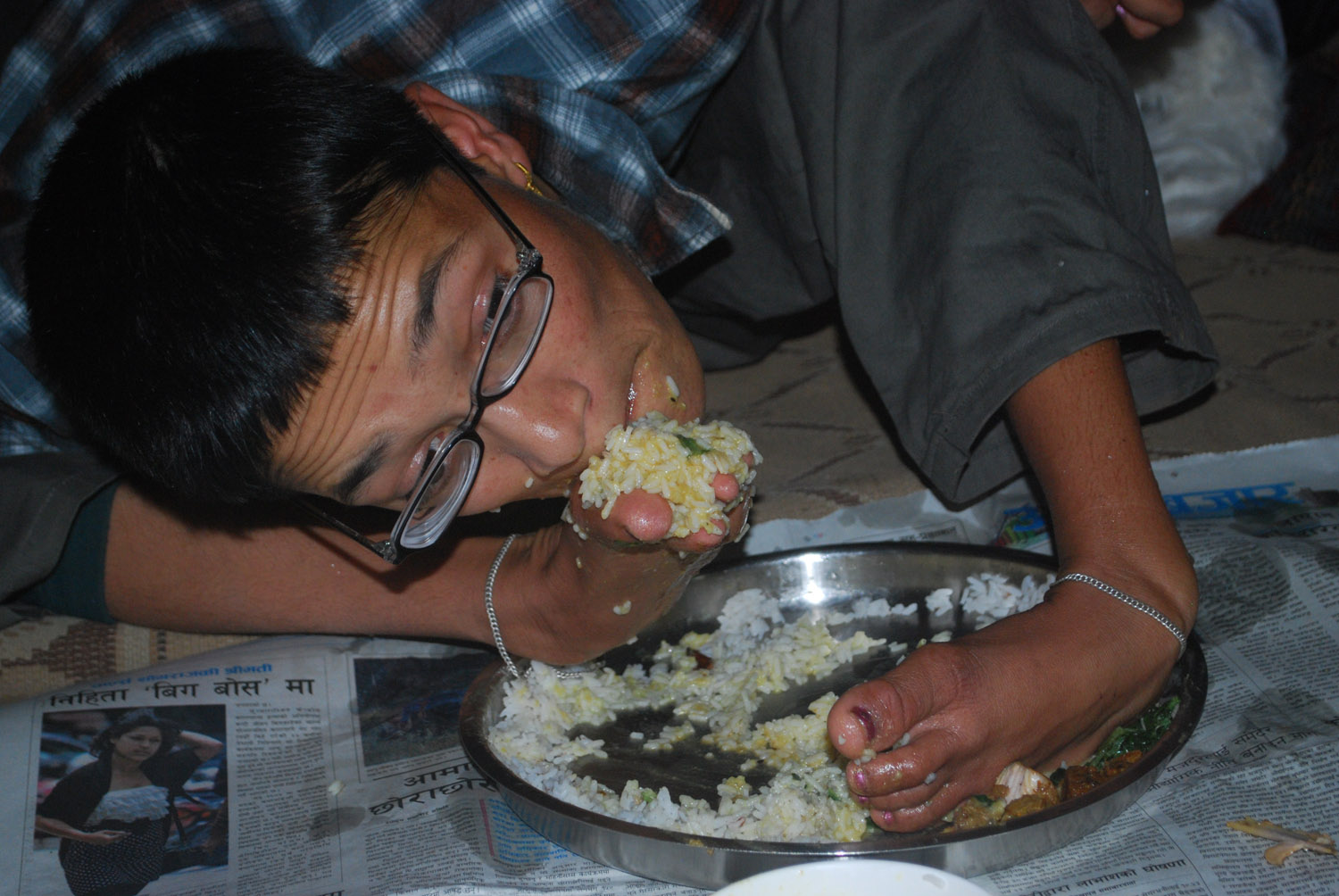
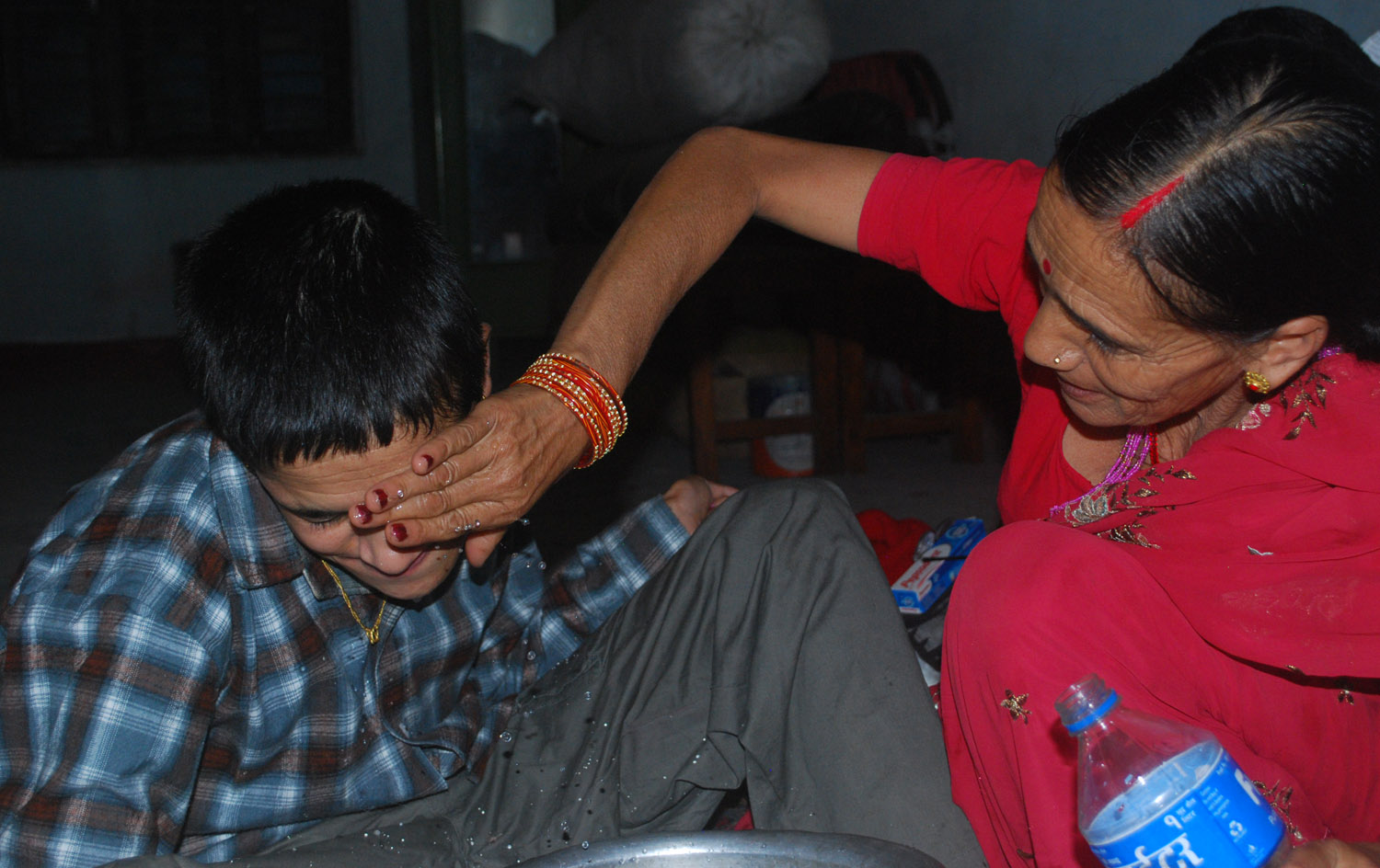
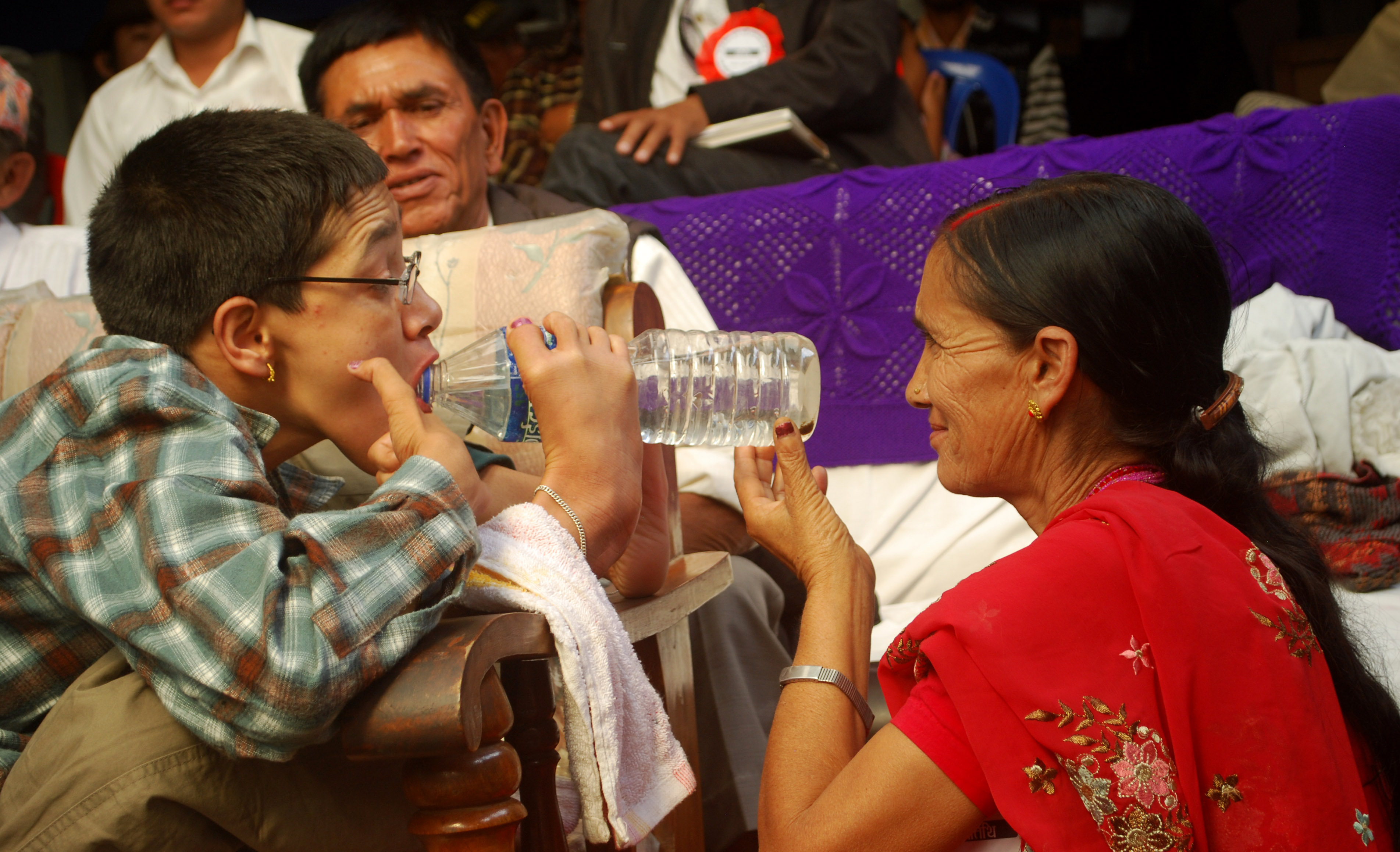
Before I learnt to write, it was difficult for me to communicate. If I was hungry, I couldn’t write or sign it, I just opened my mouth wide and people would understand that I wanted to eat. If I was thirsty, I pointed at the water pot. If I need to go, I just pointed at my behind. To say 'yes', I grunted, and to say 'no' I shook my leg.
People say: “Wherever there is life, there is also the art of survival.” I had to survive, so I learnt the art of living. I was born like everyone else with a mouth and a stomach, which I had to learn how to deal with hunger, thirst and waste disposal. I had problems going to the bathroom, I had problems cleaning myself afterwards. I was nine-years-old, and when there were no older people around I had to take care of myself.
There aren’t too many moments from my childhood of which I have happy memories. Even after throwing up the dust on myself after writing my first alphabet on the ground, I was sharply reprimanded by my mother. And when I refused to listen to her, I was even spanked. But neither the scolding nor the beating dampened the thrill of knowing I could write.
Even so, it hurt me that there wasn’t anyone to share my joys and sorrows. It would have meant a lot to me if someone would have been there to be happy with me, or to caress my shoulder with warm hands and say: “Don’t worry everything will be all right.” But there was no one, everyone who saw me would mutter “Poor girl” and I could tell they would hope that I would die soon and not have my agony prolonged.
But I have no ill feeling towards anyone, I love them all. They couldn’t help their ignorance and their mistaken outlook on life. Perhaps if I hadn’t been pierced by those thorns early in life, I wouldn’t be the strong person I am today. Life has thorns and flowers, you have to learn to live with both. I picked the flower of happiness of having written my first letter, and I also picked the thorns of my sadness and pain.
The first word I ever wrote was the word 'kalam', and that must have been because I had a great need to own a pen. After writing my first letter in the ground, I had laughed and shouted with joy but no one had tried to find out why was suddenly so happy. I started working on words after learning to write alphabets, and life kept flowing drop by drop. Learning to write opened up a world of words, and it made me start looking for the meaning of life.
My father was teaching my sister 'ka kaa ki kii', showing her the consonants with his fingers and making her pronounce them. I would sit beside her and look at the letters and copy them on the ground. I used the pages of the copy book that my sister left behind to practice writing the letters I had memorized. I used to write all day long until my father, mother, brother and sisters returned home. I would hide the papers before they entered the house, and pretend to be in the same position I was in when they left in the morning. That is how I learnt all the alphabets and words.
Human beings need to communicate, and even if they are not allowed to they find ways to get across. I was a human being, I wasn’t an animal, I had consciousness and the ability to think, I could hear and could see enough, I still had some strength left in my toes. These were what I had to work with and make the best of to build bridges to the world around me. I had to overcome not just apathy but also negativity. When they saw me writing letters on the floor, they would say: “What is the use, she can’t achieve anything with that knowledge.”
What a culture we Nepalis live in, instead of showing compassion to those who are weak we try to keep them weak. It wasn’t surprising that I was treated like that. But I didn’t let that dishearten me, I followed my destiny.
It wasn’t easy. It was a path with obstacles every step of the way. There were boulders and craters, I would be stung by sharp stones and thorns. But I got to love that path, the path I am still on today. It still isn’t easy. Learning to write made it bearable, the joy of the written word poured bliss into my soul.