

|
|
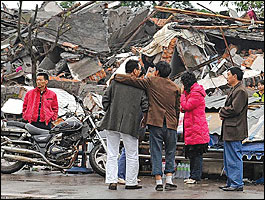
It was 2.32 PM on 12 May when the tables in the office started rocking. There was no panic, and it was only later that the full horror of what was going on 500km away in Sichuan became apparent.
The 7.9 magnitude earthquake flattened many towns in the central Chinese province, and by Thursday the death toll had risen to 19,500 with a staggering 45,000 more still buried under buildings. Here at the edge of the Tibetan plateau in Qinghai province, office and factories are donating blood and organising help.
China has mobilised 50,000 soldiers, deployed its search and rescue teams and provided unprecedented access to the mass media. Emergency relief and medical services are pouring in.
As a Nepali doctor who has been involved in relief in Iran after the Bam earthquake and post-tsunami medical camps in Sri Lanka, my thoughts turned immediately to Nepal and the unthinkable: a similar quake hitting Kathmandu. A Big One in Kathmandu is not a question of if. It is a question of when.
Even with professional rescue teams, mobility and resources, the Chinese have found it difficult to get equipment and personnel to the epicenter. Many hospitals and school buildings have come down, killing hundreds of patients and children.
|
|
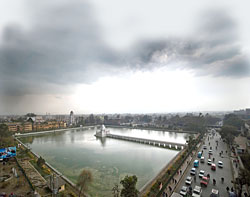
With Kathmandu's urban density, shoddy construction, and no state-level emergency plan, a future earthquake would leave between 100,000-200,000 dead. The last big earthquake in 1934 was of 8.0 magnitude and killed 5,000 people in Kathmandu at a time when the Valley's population was only 150,000 and most lived in two-storey houses. One-third of Kathmandu's population perished in the 1255 earthquake, including King Abhaya Malla.
There has been a big earthquake in Nepal every 70 years and the next one is long overdue. Nepal's planners must start thinking about rescue, relief, rehabilitation, retrofitting seismic-resistant schools and hospitals and enforcing zoning laws.
Those who survive will face water and food shortages. With roads and the airport damaged, relief will be delayed and social anarchy will spread. Nepal has begun to organise urban self-help groups for building safety and emergency response.
"If a Sichuan-type earthquake were to hit here it would be catastrophic," says Amod Dixit of the earthquake safety group, NSET, "we've just got started, and there's an urgent need to accelerate work on disaster preparedness."