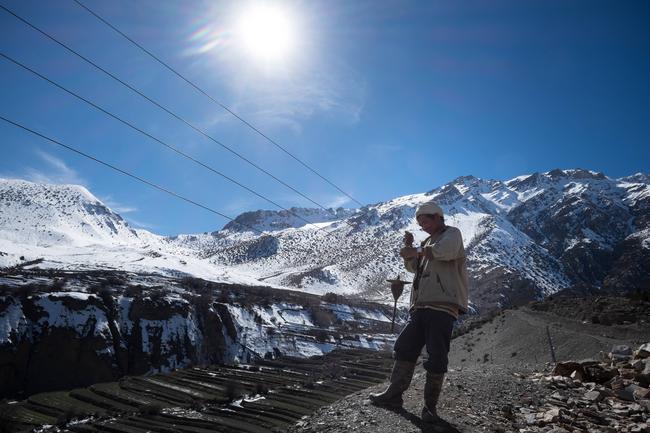
SPIN MASTER: A villager spins yarn using a traditional drop spindle in Lower Mustang. Photo: Kenji Kwok
When construction for the road from Beni to Lo Manthang was completed last year, many speculated that it would bring an end to Mustang’s mystery. After all, it was its inaccessibility and 'forbidden' status that attracted many searchers of Shangri-La to pay high entry permit fees and visit a region nestled on Nepal's northern border with Tibet.
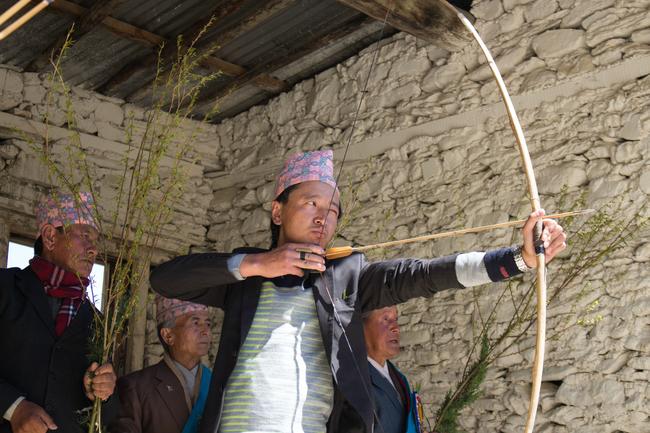
Eased accessibility has made the district more modern, but the locals are more wary of the need to preserve their unique Tibetian traditions. The annual archery competition in Marpha that has been organised for the past 100 years by Thakali families of the area has changed. While contestants could earlier come in casuals, the organisers in 2010 made it mandatory for participants to wear the official Nepali daura suruwal.
Lo Manthang may be the ultimate destination in Mustang but there are also many obscure villages in Lower Mustang that are as mystical and can be reached on a day’s hike from Jomsom.
Jump off from Jomsom
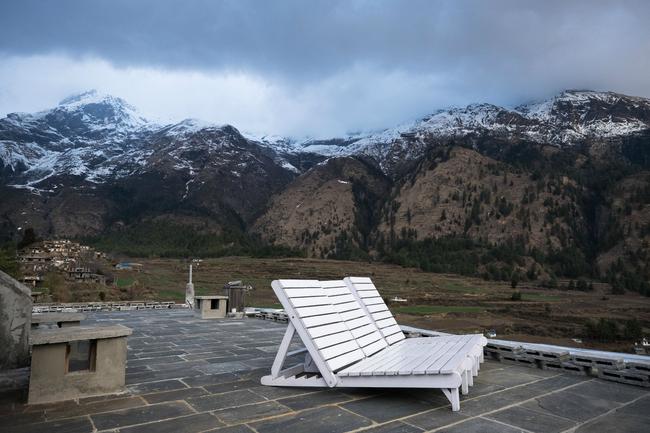
It used to be that Jomsom was just a windy airport town where trekkers waited for their flights after the Annapurna Circuit. But with a new road Jomsom is now just a day's drive from Pokhara and a jump off point for many short treks around this trans-Himalayan Valley with its dramatic scenery. The beauty of Jomsom today is that you can make it your base for a leisurely Himalayan holiday. These are just three of the short treks you can do from Jomsom to its surrounding side-valleys.
- Thini
- Dhumba
- Kutsab Teranga Monastery
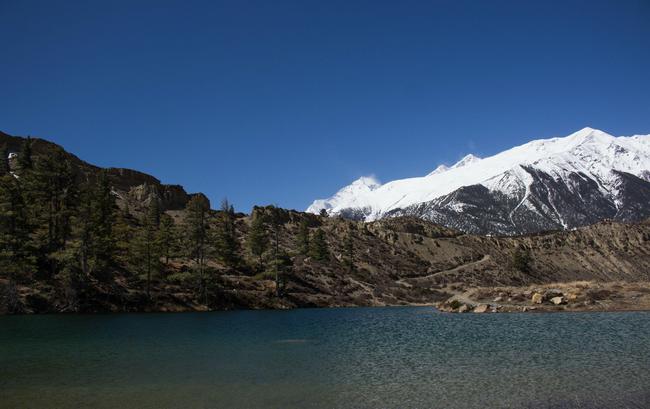
This 4-5 hour hike from Jomsom is easy paced and allows trekkers ample time to take in the sights and sounds of the village. Walk along the narrow paths along terraces of barley before arriving at Thini. Next, meander along the spacious rock roads that run through Jomsom before arriving at the gorgeous Dhumba Lake where views of Dhaulagiri and Tukuche Peak greet you. There is a little teahouse on the edge of the lake where you can sit and enjoy the view.
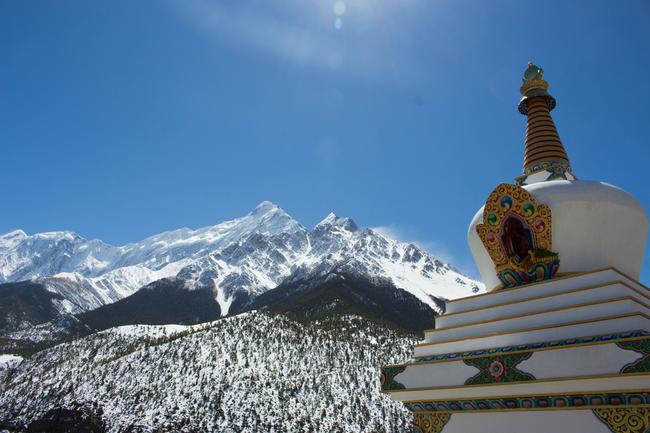
To complete the day’s trek, you can choose to walk up to the nearby Kutsab Teranga Monastery. Pine trees line the path to the gumba while prayer flags decorate small ashrams and stupas built on top of the hill.
Difficulty level: 2/5
- Jomsom
- Kagbeni
- Jhong (Lunch)
- Muktinath
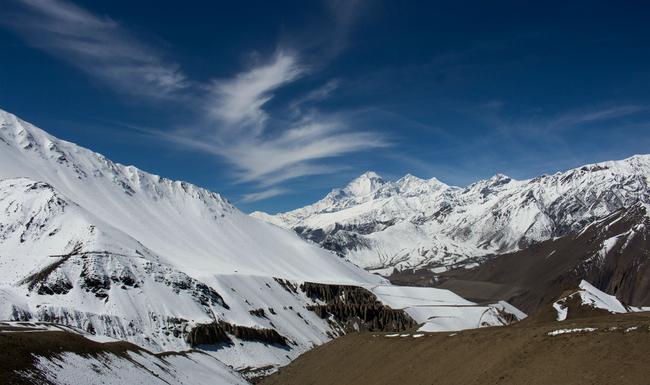
The route from Kagbeni to Muktinath offers gorgeous views of Upper Mustang’s ochre-coloured landscape and the sweep of the Kali Gandaki. Stop by Jhong for lunch before continuing up to Muktinath. Though this trek does not require steep ascents, the long up and down requires stamina and a steady walking pace if one wishes to reach the famous temple by sunset.
Difficulty level: 4.5/5
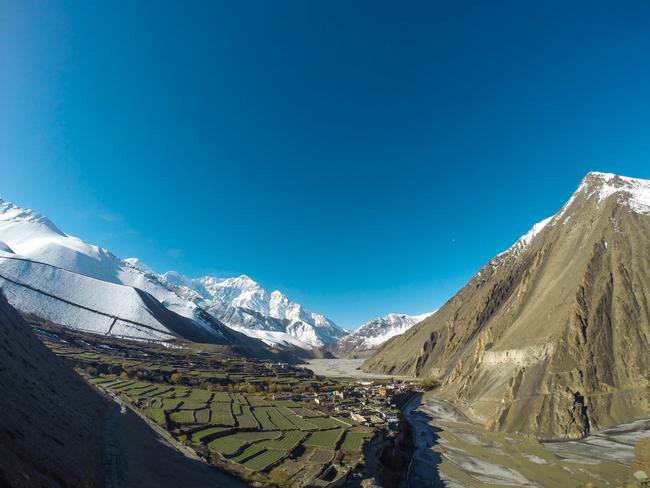
- Dhakarjung tower
- Phalyak village
- Phakling village
- Kagbeni
For those who crave a little adventure, there is the challenging trek up to Dhakarjung tower, where the telecom station for Jomsom is located. This alternative trekking route was discovered by Tripple Gurung, a former airline pilot who now runs Om's Home in Jomsom. This short but steep walk has plenty of adventure in the form of snowy trails especially along the northern slopes.
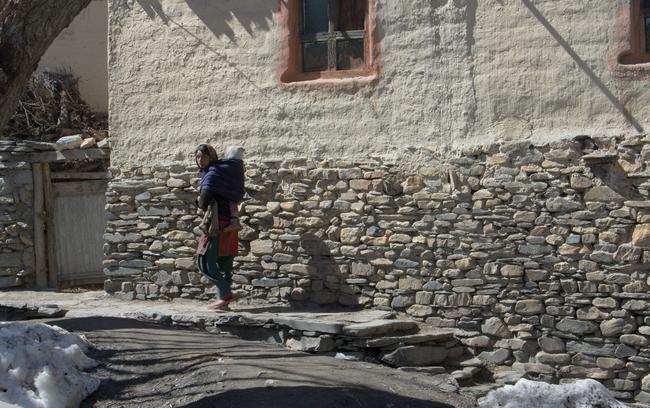
Seasoned trekkers can expect to reach Dhakarjung top in about two hours, before taking another hour or so to get down. Your lunch stop will be most likely be at Phalyak village, from where you can continue on to Kagbeni. Those who want to trek further can stay a night in Kagbeni before going on to Muktinath the next day. For those who wish to return to Jomsom, jeep rides are available throughout the day, with the vehicle leaving when the maximum capacity (12) is met.
Difficulty level: 3.5/5

Aiming for tradition
Marpha’s century old archery competition is proof of how much the Thakali people value their culture
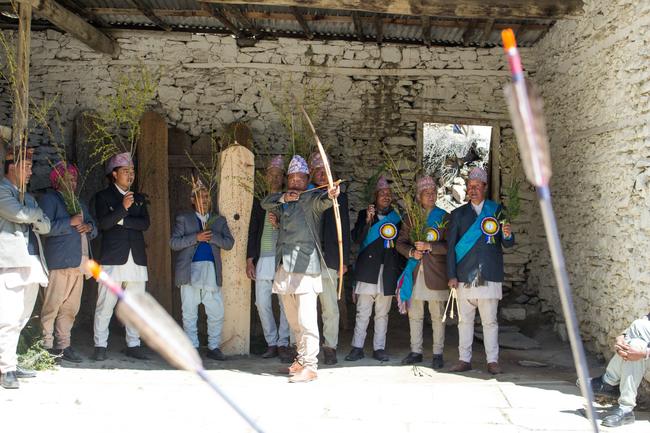
For a week every year in Marpha, some 50 men gather in a courtyard wielding traditional wooden bows and arrows to take part in an archery competition called ‘Termi Torenla’ which means 'new beginnings' in the Thakali language.
The men take turns to aim at a single black target in the middle of a rectangular wooden board 30 metres across the field. The competition usually lasts for about ten hours a day, or until a competitor manages to hit the bull’s eye. Points are then calculated before a new round starts the day after.
For centuries, the bow and arrow have been synonymous with hunting. But when asked if hunting was practiced in Marpha, Bhakti Hirachan, one of the competition’s organisers said: “We’ve never hunted animals for food.”
A community that survived on subsistence farming and animal rearing, wood and bamboo were part of Marpha’s culture since the very beginning. Hirachan said: “We made use of our natural resources by making bows and arrows, and we organise this archery competition as a way to bring people together and remember our culture.”