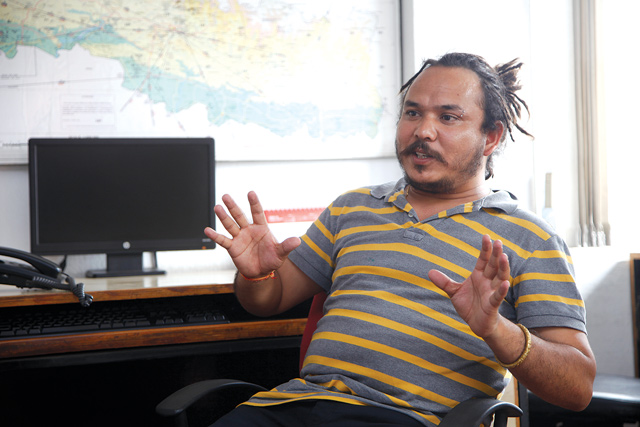
Min Bahadur Bham remembers refusing, as a school student in Mugu district, to join the Maoist army but recalls most of his classmates abandoning their homes to enlist. With many youths leaving, shops forced to shut down and police patrolling the area every night, life in the village got increasingly dangerous. Twenty years later, having found refuge in the realm of cinema Bham (below) revisits the past and gives the world a rare glimpse into his life’s journey.
“That was the reality of our society then. This movie is my way of releasing all those pent-up emotions,” said Bham, whose directorial debut Kalo Pothi has gained wide acclaim in Nepal since its release last week.
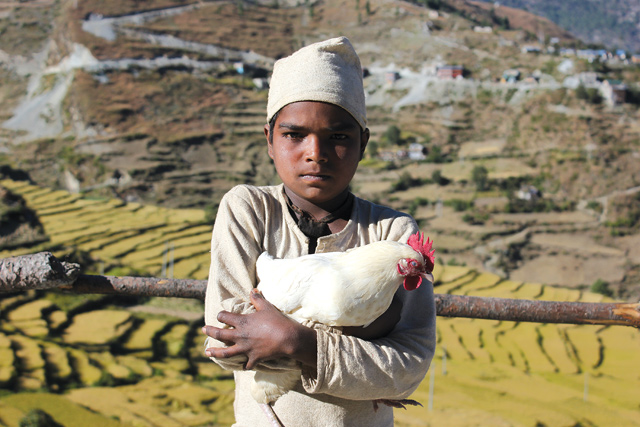
Set in 2001 in a war-torn village in Rara, the story is about two friends, Prakash and Kiran. The plot unfolds as they embark on a quest to find Karishma, the hen gifted by Prakash’s sister who later joins the Maoist army. The movie skilfully explores the intricate relationship between two boys from contrasting social backgrounds, which Bham contextualises within a narrative of the political situation in the country. It makes for a compelling and heart-breaking story of camaraderie and loss.
The story is one close to Bham’s heart. The chronicle, with its vivid and memorable characters, has been sketched from his personal experiences. Recollecting his childhood days, he revealed how — like in the movie — his friendship with another young boy in his village, which played a pivotal part in his life, was despised because of their differing castes. “His father always pushed us both to excel in our studies because he felt guilty for not completing his,” said Bham who in the movie also tackles themes such as caste, religion and education.
“While unique, the story has a distinctly local appeal. Although set in a far-away village in Nepal, everyone can relate to it because the tale itself, of friendship and tragedy, is universal,” said the film's German producer Anna Kachko, who also produced award-winning movies like Harmony Lessons (2013)and Zhauzhürek Myng Bala (2012).