
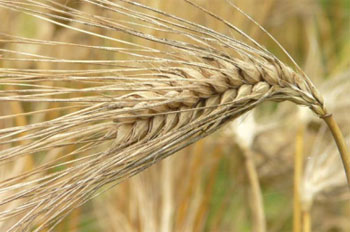
From babyhood when our mothers fed us barley water during illness to drinking scotch in adulthood, barley has stood us in good stead. In many villages in the Himalayan region, instant noodles have replaced tsampa (roasted barley) as a staple diet, chiefly due to ease of preparation. This is unfortunate because the health benefits of barley are numerous.
It is a rich source of B vitamins and micronutrients, eases bowel movement, and also helps regulate blood glucose levels. There is also some evidence that consuming barley over a long period may help to decrease blood cholesterol.
The only downside is that like wheat and rye, barley contains gluten which makes it an unsuitable grain for consumption by those with Coeliac disease. A recent article in the journal Science has shown that barley may be the reason why human habitation was possible in places as high as 4700m on the Tibetan plateau. Unlike other grains like rice and wheat, barley grows more easily than in these higher altitude areas.
The article co-authored by Chen Fahu and Dong Guanghui from Lanzhou University in China suggested that even when the climatic conditions became colder, it was possible to grow barley at high altitude in Tibet. Paleontological data (data from fossils) shows that humans have been living at high altitude in the Tibetan plateau since about 20,000 years ago. (This is in sharp contrast to high altitude human habitation in South America which is estimated to be about 6000 years old.)