Gita Limbu was born a paraplegic and has been using a wheelchair since she was a teenager. Now 28, she remembers how hard it was to move around Kathmandu’s thoroughfares both because of the lack of infrastructure and the look of other people.
“Some even asked me why I was out in the streets and that I should stay in my house,” Limbu recalls. “That was painful.”
She not as embarrassed these days because people are less judgemental and they even help by pushing or lifting her wheelchair because Kathmandu is not exactly disabled-friendly.
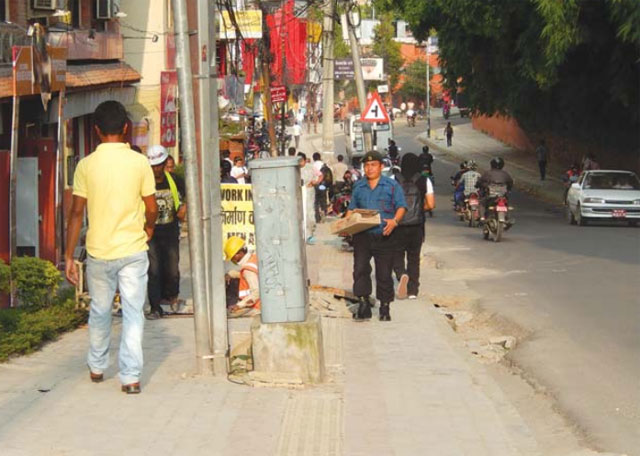
“Kathmandu still lacks infrastructure for the disabled, the roads are in bad condition and it is worse during the monsoon,” Limbu says.
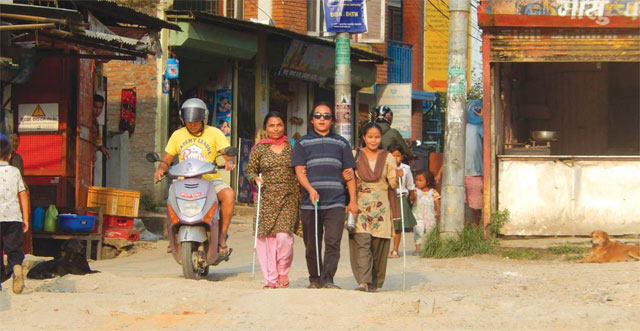
Om Prakash Banjade who is blind has noticed a similar change in attitude among the sighted. “Three years ago, people had good intentions but they weren’t sure if visually impaired would accept their help,” says this English teacher. “Now they are more aware and they know we welcome their aid.”
Banjade, 36, also wishes Kathmandu was a more disabled-friendly city. He deplores the lack of information when sidewalks or roads are being repaired. “Last week as I was going back home and fell into a hole which was not in the pavement in the morning,” he says.
Now, there are organisations like the Centre for Independent Living (CIL) which have been trying to promote disabled-friendly facilities in public transport and the streets. Its director Krishna Gautam says it is a disabled people’s organisation run by the disabled themselves.