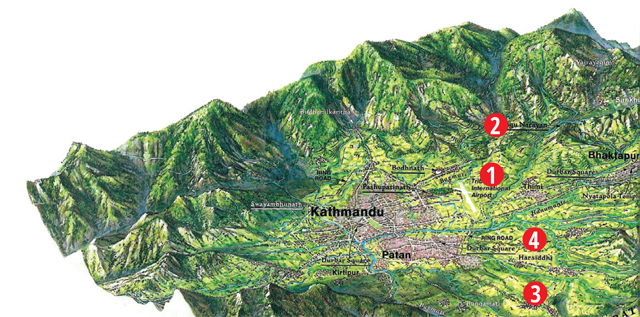
1. CHANGU NARAYAN
Barely standing
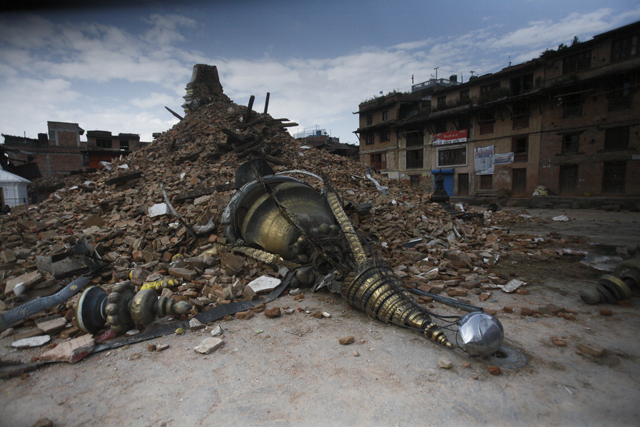
Stone inscriptions at Changu Narayan reveal that this hilltop shrine is the oldest known settlement in Kathmandu Valley. With a history going back to the Lichhavi Period more than 1,000 years ago, archaeologists say the settlement is built upon several layers of ruins of buildings destroyed in previous earthquakes.
The latest quake this year once more damaged one of Kathmandu’s holiest, most historic sites. The main temple is now propped up by wooden beams. Weakened by aftershocks, the temple’s corners are crumbling and the walls have cracks.
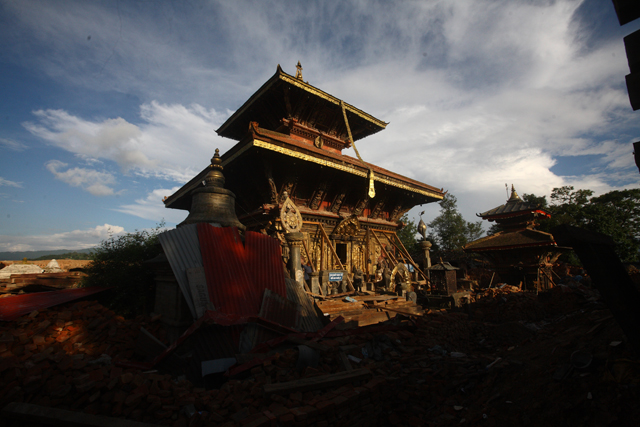
Photos: Gopen Rai
“Although the earthquake did not destroy the main temple completely, a lot of damage was done. But before we begin to renovate the temple, we must take precautions to ensure that the structure is not further damaged,” says Aruna Nakarmi of Department of Archaeology.
The plan now is to analyse the soil, strengthen the slopes below the temple to prevent landslides, study the impact of vibration from a nearby road, and only then carry out the renovation, she adds. However, some urgent repair work is being carried out on the outer walls to make the temple complex safe for visitors in future.
“Rebuilding the temple from scratch is not feasible. At the moment, we are focusing on the structure’s stability so that further renovation can be done on the outside in the near future,” Nakarmi told Nepali Times.
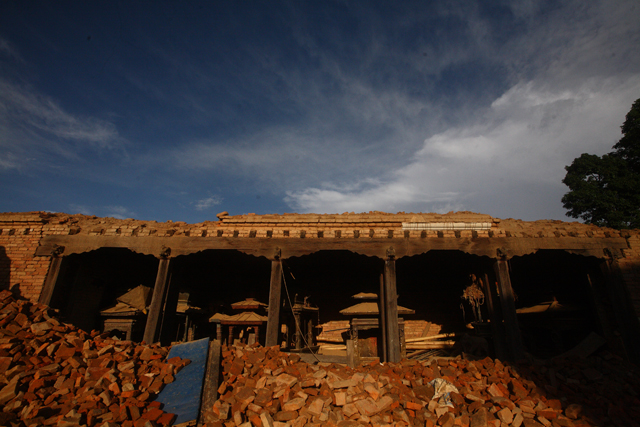
Around the temple, the four sattals housing the recently-opened Living Traditions Museum has been razed to the ground by the Nepal Army which is guarding the temple complex round the clock. Artefacts from the temple and the museum is currently being housed separately.
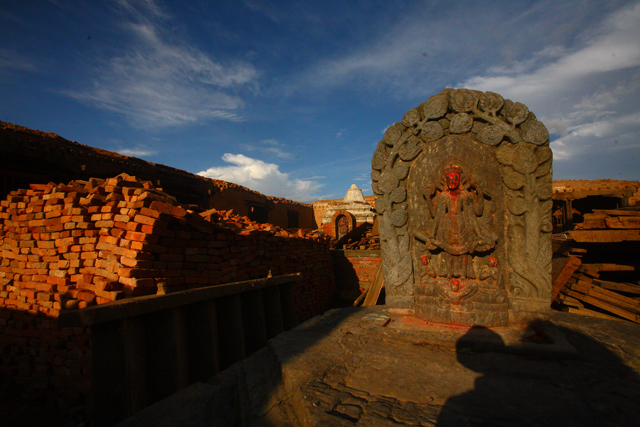
“There are plans to rebuild the south section of the museum so that historical objects can all be stored there,” says Sunita Bhadel of the Living Traditions Museum. The army, police and local volunteers have been helping out to clear and sort the debris, but with the rice planting season around the corner help is in short supply.
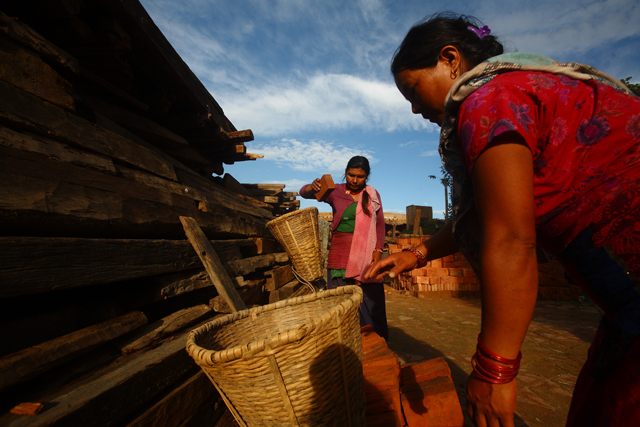
A Changu resident who lost his family home sums up the mood here: “The earthquake destroyed our houses, but at least the temple is still standing and that gives us some solace.”
Ayesha Shakya
Read also:
Changu Narayan, Stéphane Huët
Return of the past, Lawrence Miller
2. SANKHU
Historic and safe
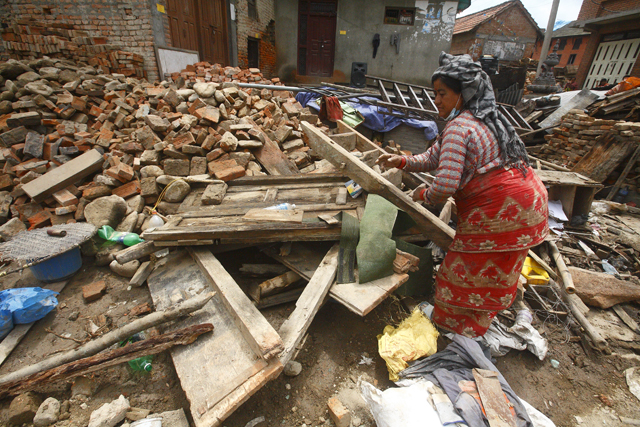
The ancient settlement of Sankhu in the eastern edge of Kathmandu Valley was being considered by UNESCO for inclusion into its list of World Heritage Sites. In January 2008, the Department of Archaeology submitted its application for Sankhu. Then came the 25 April earthquake and the historic Newar town lost most of its ancient temples and houses.
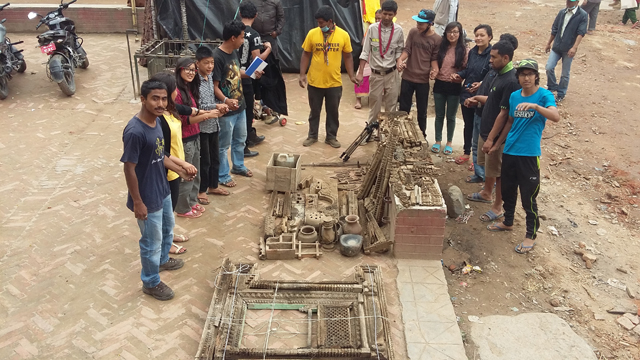
Photo: Anuj Shrestha
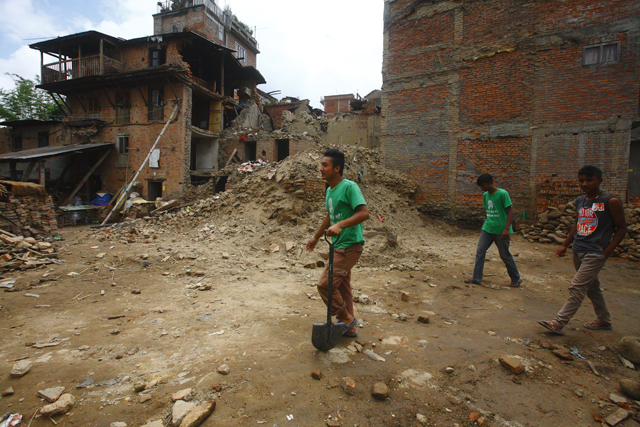
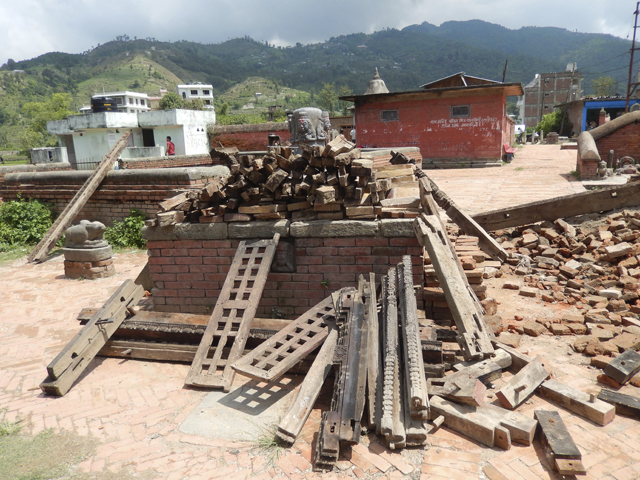
The people of Sankhu are proud of their heritage and started picking up the pieces soon after the quake. They cleared the debris themselves, and are now trying to see if they can raise money for rebuilding.
“Waiting for the government isn’t a solution,” said Suresh Pradhan, a social worker who founded the Sankhu Reconstruction Committee. “We will rebuild ourselves.”
The assessment was initiated two weeks after the earthquake by Sakwo Vintuna Pucha, a youth organisation founded in 2013 to preserve and promote the cultural traditions of Sankhu. There are now 20 volunteers between 18-26 years old protecting the artefacts, bricks and timber in the ruined town.
Some 55 historical houses, many more than 100 years old, have been damaged in the earthquake. Amrit Shrestha, 23, a civil engineering student has been inspecting the buildings and deciding whether some of them are safe enough to be repaired, or have to be torn down. Volunteers are also collecting artefacts from damaged buildings to store safely.
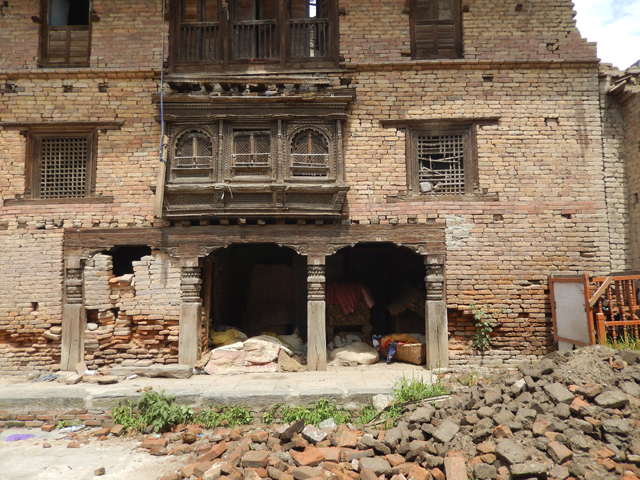
However, Sakwo Vintuna Pucha is facing challenges, some locals have already sold their sajhyas, the intricately carved wooden windows. “People need money to rebuild their houses,” Shrestha said. “But we have to explain to why they shouldn’t sell them.”
In a meeting with social workers, English teacher Birendra Prasad insisted that safety was more important than preserving old buildings. “We want houses that are resistant,” he said.
Christian Manhart, Director of UNESCO Nepal, who was at the meeting, explained that houses could be rebuilt in traditional style and still be safe. “Living in a historic city and being safe from earthquakes isn’t a contradiction,” he added.
Archaeologist David Andolfatto accompanied Manhart to Sankhu earlier this week and he was impressed by the work already achieved by Sakwo Vintuna Pucha, especially because they hadn’t been trained in heritage conservation.
Two volunteers of Sakwo Vintuna Pucha trained by the International Council of Museums (ICOM) have been sifting carefully through the ruins. Manhart also suggested they could learn how to use KLL Collect app to transmit information on status of damaged monuments.