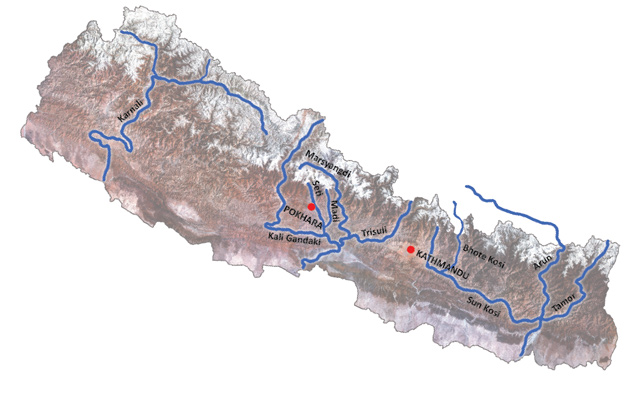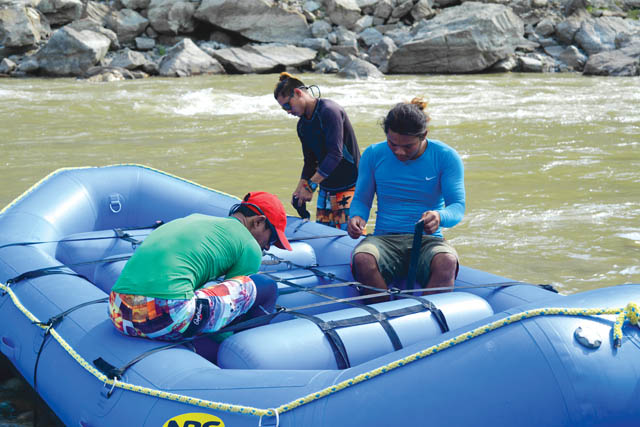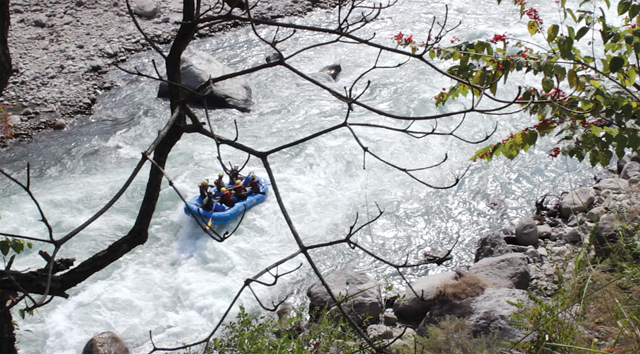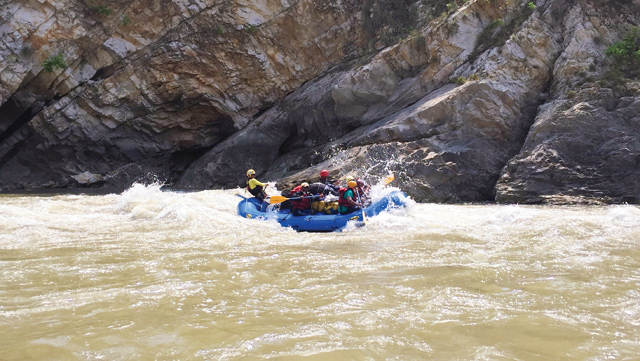
I remember the first time I tried some white-water action in 2009. A little scared, I chose to sit at the very end of the boat, which unfortunately, turned around when the ride started, putting me at the helm. Today, I can’t think of choosing to sit anywhere but right in the midst of the sheer thrill of it and the responsibility of leadership that comes with the position. Braving the raging waters of Upper Bhotekosi, Sunkosi , Trisuli, and Marsyangdi, I have come a long way since my nervous rafting days.
The topographical extreme that gives Nepal the highest mountains in the world and some of the most spectacular sceneries also endows the country with the wildest rivers for whitewater rafting.
Having experienced the thrill of rafting in Nepal only, I don’t know what it is like elsewhere in the world. Which is why I asked the opinion of one of the world’s best-known river conservationists, Megh Ale.
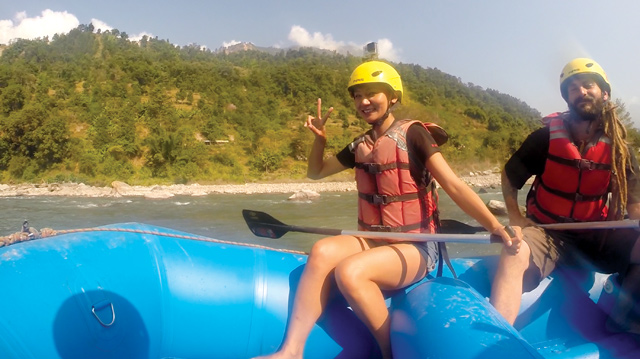
“We have the world’s best white waters for rafting,” Megh said with the air of finality, as if the debate was closed. “Did you know that Dubai just spent millions of dollars to build an artificial river to create whitewater-like rapids? But we got it all for free—a gift from nature.”
I take Megh’s word for it, and from what I have seen of Himalayan rivers I can vouch with some surety that white-water rafting here is truly an out-of-this-world experience.
So much more than just a sport
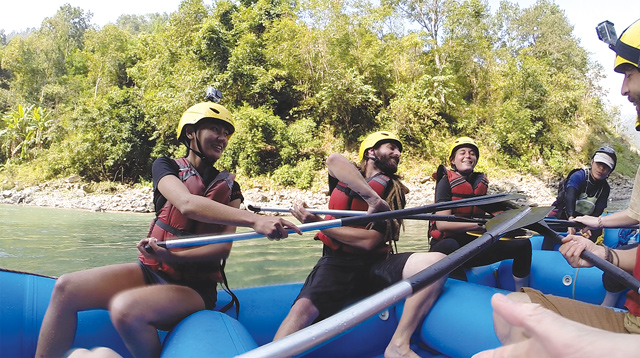
For the casual observer looking down at rafters on the Trisuli from the Pokhara highway, rafting may look like a bunch of hyperactive people clad in colourful gear screaming fun and fear down a fast-flowing river. While it is all that, rafting is so much more than just an adventure sport. Rafting is team-work that demands synchronicity by those on-board.
Technical finesse is the responsibility of the guide, but team members’ assistance is equally important. There is bonding, both with those on the raft and with nature. And while the rapids keep the adrenaline high, it is the ice-cold snow-fed water waves, the scenic green ridges that run alongside and the gorges on either side that truly makes the river rendezvous an exciting and memorable experience.
Hydropower versus Tourism
There is an ongoing debate on weather Nepal’s whitewater are best used for whitewater adventures to generate electricity for a country plagued by power cuts. Megh Ale, President of the Nepal River Conservation Trust, passionately believes that some rivers should be left pristine.
“Extracting electricity seems like a really important remedy right now, but in the long run, destroying the free flow of rivers with social, ecological, religious and aesthetic significance will only hurt the country,” he argues.