
Once more, and for the fourth time as prime minister, Sher Bahadur Deuba is following the well-established tradition of a new leader in Kathmandu making an obligatory pilgrimage to New Delhi.
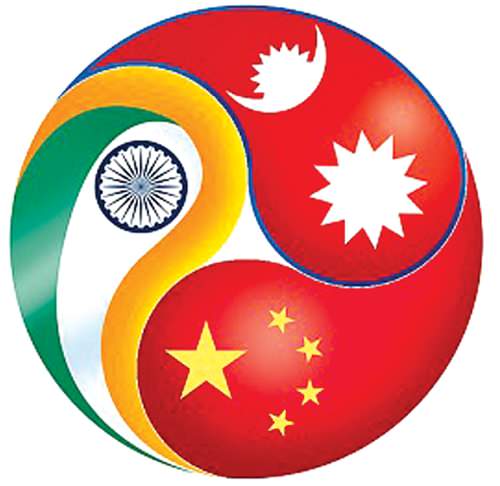
Why this has to be so is rooted in the central dilemma of Nepal’s diplomacy vis-a-vis its neighbours: while a policy of equidistance between the two giants is desirable, the geopolitical reality is that Nepal’s overwhelming economic dependence on India makes those ties asymmetrical. Nepal may want equi-proximity towards its neighbours, but geography puts New Delhi nearer than Beijing.
Read also:
Himalayan rumblings, Guest Editorial
The blockade that followed the earthquake in 2015 was starting to redress the equilibrium in relations with north and south as UML Prime Minister KP Oli leaned over backwards to seek China’s support. But such nationalism has never been sustainable in Kathmandu and sure enough, Oli had to go, to be replaced by a more pliable Pushpa Kamal Dahal, who has allowed the 10-point agreement on trade and transit that his predecessor signed in Beijing to lapse.
Foreign Minister Krishna Bahadur Mahara has already been to Delhi to do the spade work for PM Deuba’s visit. He met External Affairs Minister Sushma Swaraj to work on the agenda. But we know from the past that no matter what the agenda, it will be the unscripted one-on-one between the two prime ministers behind closed doors that will determine the outcome. Call it the small country syndrome. To give some credibility to equidistance, however, Foreign Minister Mahara is expected to dash off to Beijing before Deuba goes to Delhi.