
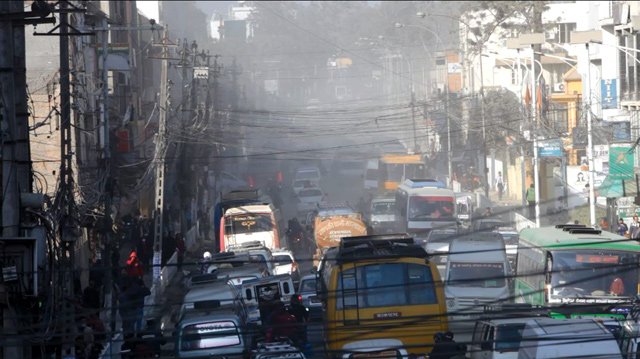
Just when we thought the Valley’s urban environment couldn’t get any worse, Kathmandu has become even more unliveable. The rivers are open sewers, their holy banks are garbage dumps, the dust is so thick it can’t be measured, there are epic traffic jams, roadside air quality fails the WHO test even when it is at its best, brick kilns and garbage burning choke residents.
Read also:
Every breath you take, Sonia Awale
Highway Robbery, Shreejana Shrestha
Yet, these are only symptoms. The real disease is dysfunctional governance. The city looks the way it does, and is as toxic as it is, because of the lack of accountability which in turn is a direct result of local elections not being held for two decades. Nepal is ruled by a political cartel that reigns through patronage and bhagbanda. Dirty politics makes dirty cities.
As the special coverage in this issue of Nepali Times proves, there is a direct correlation between better public transport and improved public health. Since a bulk of the most harmful suspended particulate matter in Kathmandu’s air is from motor exhaust, efforts to clean it up must zero in on reducing the number of vehicles. The best way to achieve that is by upgrading public transportation with a bigger, cleaner and more reliable urban mass transit system.