Vox Madhes
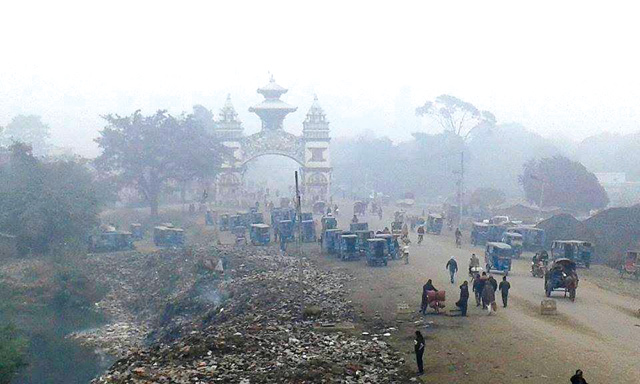
When parliament in Kathmandu passed an amendment to the constitution granting better representation and adjusting electoral constituencies to reflect population, many here thought the blockade at the Indian border would finally be lifted after five months.
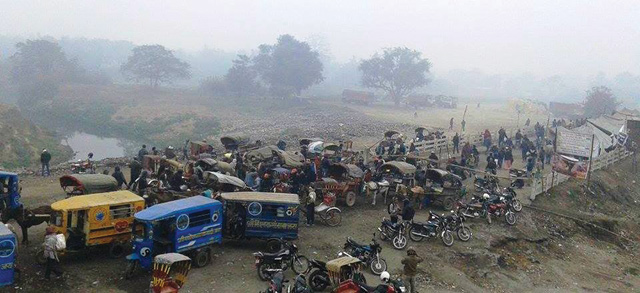
But Madhesi leaders say the amendments do not go far enough, and they have continued their sit-in at no-man’s land. However, cold and fatigue have taken their toll and the presence of the protesters is visibly reduced.
Madhesi leaders also seem to be divided over whether to continue with the border obstruction, or to change their tactics. Mahendra Raya Yadav of the Madhesi Front appeared to sense that the public mood in the plains is changing and people are fed up with the disruptions. But hardline Madhesi leaders feel the blockade is working and it should continue until the Big Three in Kathmandu agree to re-demarcate provincial borders.
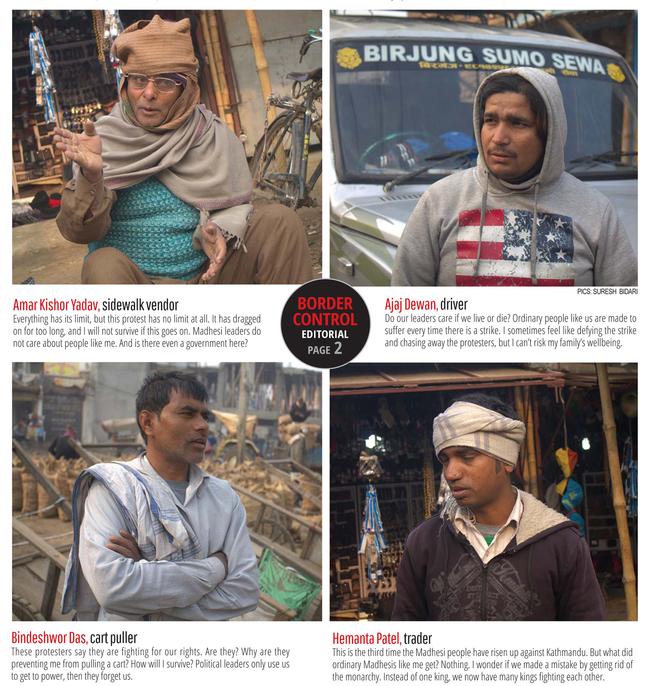
The gulf between Madhesi leaders and the Madhesi public about the border obstruction seems to be widening. Till a month ago, most people on the streets of this border town that depends on trade with India would not speak out for fear of repercussion, particularly from Madhesi parties. But they are now so fed up, they are more than willing to speak on camera.
Suresh Bidari in Birganj
Read also:
Not their battle, Navin Jha
Pics: Suresh Bidari
Tired of pundits pontificating from the pulpit here in Kathmandu, we tried to find out the real ground situation at the Birganj-Raxaul border this week. Why is this checkpoint still closed, and how is the blockade affecting people in the plains five months on?
Despite assurances that Foreign Minister Kamal Thapa got in New Delhi last month that the siege would be lifted once the amendment to the constitution was passed, the Raxaul border is still sealed even though traffic is almost back to normal at other border crossings. Madhesi leaders walked out of the parliament on Saturday during the vote on the amendment, and have since said that it does not satisfy their demands.
The amendment addresses the Madhesi demand for proportional representation in all sectors of government as well as demarcating electoral constituencies on the basis of population as the first criteria. Some Madhesi parties say there is no guarantee that the provisions in the amendment will be implemented. They point out that their other two demands on citizenship and marking out the boundaries of the two proposed Tarai provinces have not yet been addressed.
There is obviously a wide trust deficit here. Just as the government, and especially Prime Minister K P Oli are being obdurate and disparaging about Madhesi demands, the Madhesi Front is disunited and keeps shifting the goalposts. Lately, it is becoming apparent that the tail is wagging the dog and the most radical faction is setting the agenda. And, there is the belief in Kathmandu that the blockade has nothing to do with Madhesi demands at all, it was concocted by New Delhi and as long as the bureaucrats there don’t get whatever geo-political concessions they want from Kathmandu, the blockade will not be lifted.