
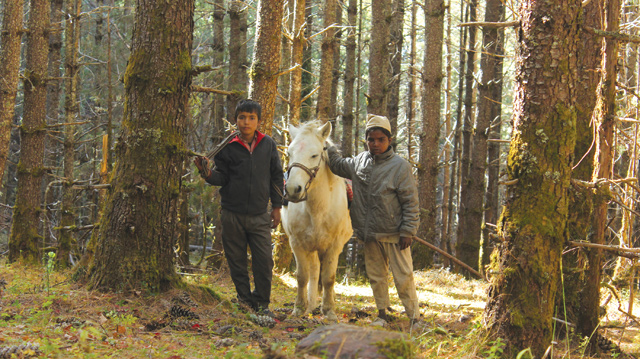
Min Bahadur Bham’s first feature film Kalo Pothi (Black Hen) is an example of the new wave of Nepali cinema, the kind that chooses to portray stories with truth and heart, over melodrama and action. Bham’s film is a move towards portraying aspects of Nepali life that are often neglected in mainstream narratives — the minutiae of village life and the marginalisation caused by the caste system that is rarely a focus for Nepal’s urban-centric cinema.
Kalo Pothi is set in a small village in Mugu in northwestern Nepal. At the time of the conflict, villages like these across the country were victimised by Maoists and state forces alike, the former with forced recruitment, the latter with often indiscriminate punitive action against those suspected of being in league with the insurgents.
Set against this backdrop of war, Kalo Pothi tells the story of an unusual friendship between two boys, Prakash (played beautifully by Khadka Raj Nepali), a Damai boy, and Kiran (Sukra Raj Rokaya), the grandson of the high-caste head of the village.
The rhythm of this story is gentle village life, and the cast of characters, prejudices and politics are all introduced, albeit slightly confusingly for a viewer who may be unfamiliar with the social dynamics of Nepal at that time. Slowly the friendship between the two boys, their personalities, their hopes and fears, which in this case involve rearing the hen from the title of the film and selling her eggs to pay for cinema tickets, become the pulsing heart of the narrative.