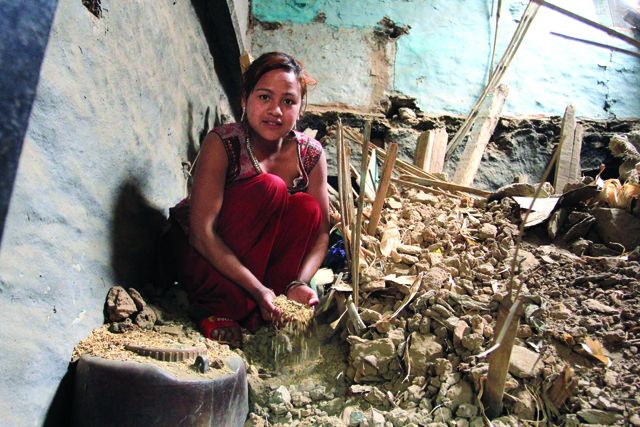
Suk Bahadur Lama of Rayale village of Kavre isn’t too worried about food, like many in this district east of Kathmandu he is more concerned about sheltering from the rain at night. A heap of bricks and timber is all that remains of his house and cowshed.
In a sight familiar across the 15 districts ravaged by the earthquakes of 25 April and 12 May , Lama and his family are busy weeding their corn fields, harvesting potatoes and watering the cabbage and cucumber patch right next to their ruined homes and improvised tarp shelters. The rice seedlings are already growing, and waiting for the rains for transplantation.
“We were lucky that we all survived, and at least we have a plastic sheet above our heads," says Lama, who works as a driver in Kathmandu, "we are in our fields out of necessity to grow food, but our hearts are not in it."
The Lama family is lucky, millions of other farmers have lost relatives and neighbours, or all their livestock, seeds, and food stores. They need emergency food aid, shelter, as well as rice seeds for the planting season which is only three weeks away. With their families and homes gone, many are too disturbed to turn their minds to farming. Because these districts also have a high outmigration rate, there are few to lend a helping hand with farming and reconstruction of homes.
“Their entire livelihood system has been disrupted,” said Hari Dahal, former secretary at the Ministry of Agriculture who is now with the Nepal Development Research Institute. "They don’t have the motivation to farm for agriculture after what they have been through.”
The loss of livestock means there aren't enough animals to till the fields, milk production has plummeted in districts like Kavre, Sindhupalchok and Dolakha where the dairy industry was the mainstay of the economy. With the livestock gone, there also isn't enough manure for the fields. Even if agriculture is revived, experts say there will be a decline in productivity. Subsistence farmers who depend on rain-fed agriculture are going to be hit hardest, especially since meteorologists are predicting a deficient and late monsoon in the subcontinent this year.
Despite the calamity and devastation, farmers are hardwired to farm because they know instinctively they need to grow food to survive. In Dolakha Bazar, which suffered huge destruction in the 12 May quake Pramila Shrestha rummages inside the ruin of her home to try to retrieve the family’s seed store. She runs out as an aftershock hits. Some of the plastic containers are crushed, but she is happy the rice seeds can still be retrieved.