First, the earthquake cut off the highway to China through Kodari in April, then the blockade has obstructed Nepal’s trade links with India since September. Landlocked Nepal is virtually cut off.
The government boasted it would open the historic Rasuwa border with Tibet, and traders and tourism operators had pinned their hopes on this route speedily coming into operation. The 1,000 tons of fuel gifted by China did pass through this narrow road with much fanfare in October, but since then traffic has slowed.
The Nepal Army is to build a highway along the Bhote Kosi gorge, but that will take at least two years to complete. And Nepal needs to build customs, immigration and cargo facilities before this highway can serve as an alternative trade lifeline.
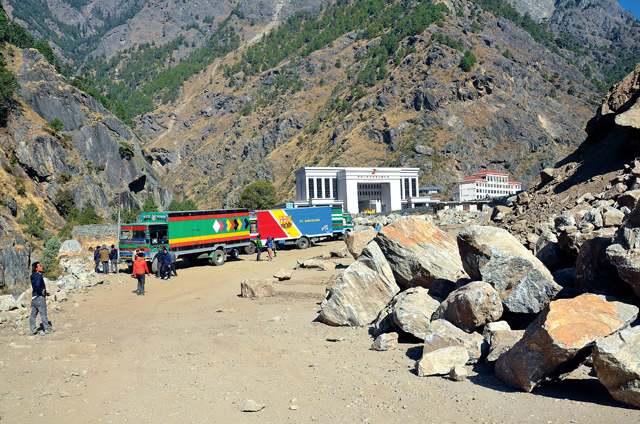
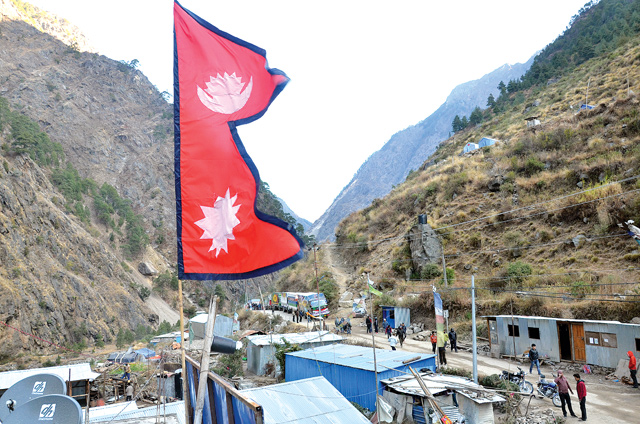
Across the river in China, there is an imposing 7-storey building and paved roads, while on the Nepal side there are tin huts and dusty, bumpy roads (pics, above). Nepali traders haven’t even been granted one day passes to travel to Kerung to buy goods.
Last month, a team led by the Chairman of Nepal-China Business Association Kumar Karki pleaded with officials on both sides to go to Kerung to urgently facilitate trade. Many Nepali businessmen who had rerouted their goods to Rasuwa after Kodari was closed are disheartened by the delay.
“We are facing difficulties because we believed in what the media told us,” says businessman Shyam Rugata who was in Rasuwa to study the situation in the border. Chinese transporter Zang Tsi Ping says that even if the goods arrive at Kerung, it is difficult to get it across to Rasuwa.