
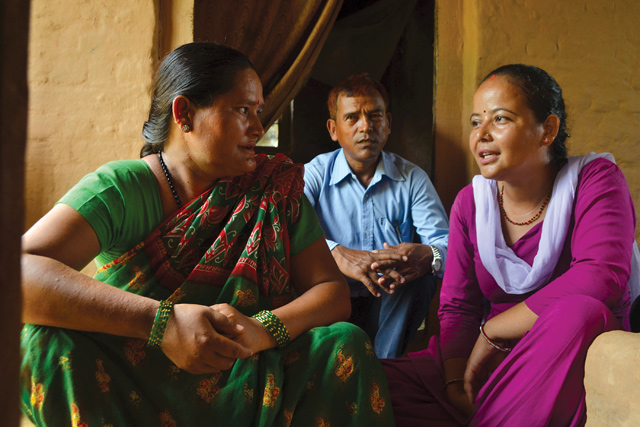
After containing a general AIDS epidemic, Nepal has seen a remarkable turnaround in either decreasing or stabilising the prevalence of HIV among high-risk groups.
The most recent data suggests that there are approximately 39,000 people living with HIV in Nepal, with 29 per cent of them women. However, in the 15-24 age group, women with HIV outnumber men by 1.5 times highlighting the vulnerabilities of adolescents and young women.
One of the reasons for Nepal’s success is that people living with HIV are at the forefront of community and home-based care. They provide regular support for people on Anti-retroviral Therapy (ART) and also ensure access to the drugs. Despite elusive vaccine and cure, continued stigma and discrimination, the introduction and expansion of ART has transformed the situation of people living with HIV in Nepal.
Nepal’s response has been backed by a sound national strategy that is grounded on evidence-based, tailored approaches. They focus on targeted interventions for female sex workers, people who inject drugs, men who have sex with men and transgender people, and male labour migrants and their spouses. This approach has yielded impressive results with stabilising or declining HIV prevalence among key populations, even though access to ART needs to be improved, and awareness campaigns maintained.
Of the people living with HIV in Nepal, 68 per cent were identified through HIV testing. Nearly 37 percent of them were women. The HIV programs have consistently tested around 2,000 people as HIV positive for the past seven years. The proportion of HIV positive among those tested has constantly dropped from around 4.5% in 2008 to 1.6% in 2014. This could be due to declining HIV prevalence among key populations, even though we need to ensure that we are testing the right people.
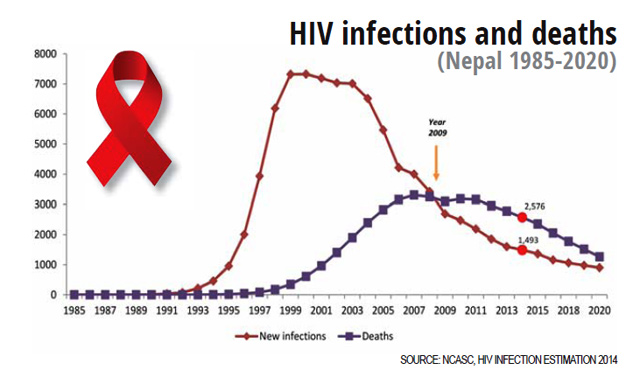
Nepal provides free ART through 61 sites (mostly government centres) in 55 districts. Nearly half the 11,089 people currently enrolled on ART are women. Of the 14,745 people enrolled on anti-retrovirals 24% have either died or have been lost to follow up. A recent survival study among ART patients in Nepal has shown that mortality is almost twice among men than women. Nearly 500 HIV positive women become pregnant every year, and only 33 per cent of infected women received ART in 2014.