Millions of years ago, when the Eurasian and Indian plates smashed into each other, they formed the Himalayan mountains and gave Nepal its prime tourism attraction. The two tectonic plates are still rubbing against each other and have given the Himalaya another tourist attraction which has not been fully tapped: hot springs.
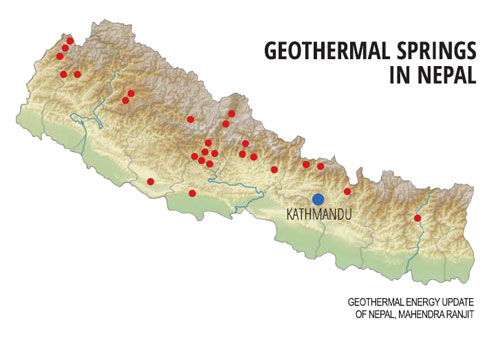
The same geological reason Nepal has frequent earthquakes is also what gives us the country’s at least 32 identified geothermal springs dotted across what geologists call the Main Central Thrust, that marks the suture between the two plates deep beneath the earth.
Geothermal expert Mahendra Ranjit says although research on geothermal energy started in Nepal more than 30 years ago, the emphasis was misplaced. “We looked mainly at generating electricity, which is difficult and costly due to the relatively low temperature of the hot springs in Nepal. What we need and should focus on is the direct use of these springs, like in tourism development and farming,” Ranjit told us.
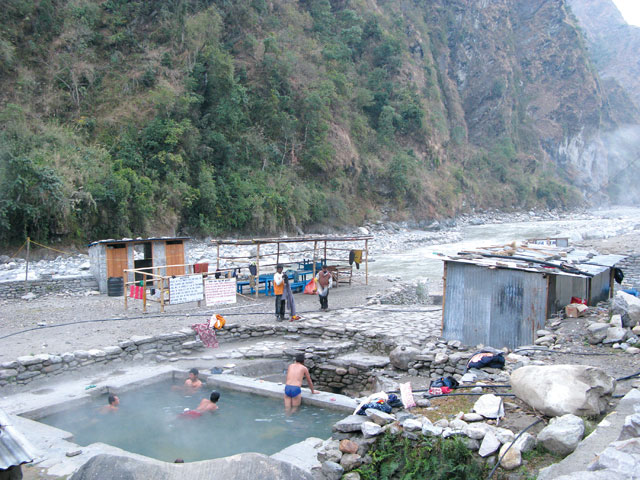
All over Nepal, locals have traditionally used hot springs for balneotherapy, to cure everything from back pain to arthritis, but the thermal springs are yet to become a stand-alone selling point for international tourists.
All the towns next to hot springs in Nepal are called Tatopani, and there are dozens of them from Humla to Taplejung. The Tatopani at Kodari is the more famous hot spring among travelers since it lies right on the highway to the Nepal-China border. The Bhurung Tatopani in Myagdi and another in Ghorepani are popular because they are on the Annapurna trekking circuit. Many other thermal springs are not visited due to lack of road access, infrastructure and marketing.
Globally, mineral and thermal springs command a $50 billion market. Japan has a long tradition of bathing in natural hot springs (called ‘onsen’). China is speeding ahead with luxury hot spring resorts and in Europe: Iceland, Austria and the Czech Republic have cashed in on the health market with wellness spas located near hot springs.
In Nepal, the huge potential of hot springs remains untapped. Tourism experts say the scope of hot spring tourism is vast and if properly developed can be a lucrative addition to the tourism market. “With the current infrastructure tourists may visit hot springs for the quaintness of it, but to attract international tourists we need to scale it up or leave everything natural,” says tourism entrepreneur Raj Gyawali. Combining thermal springs with yoga, ayurveda and even shamanism can make it a viable product, Gyawali adds.