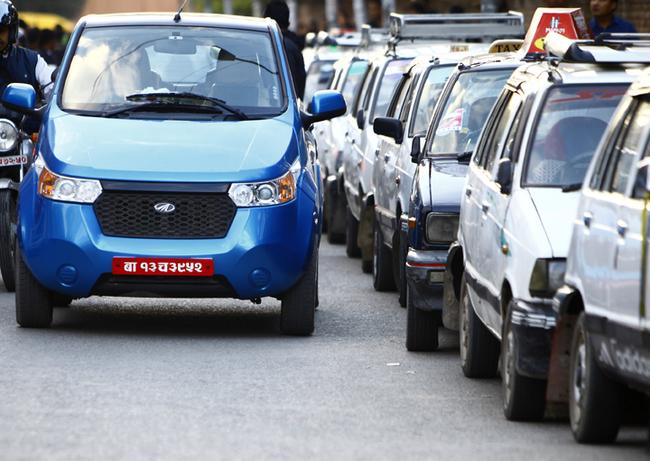
An e2o cruises past a long line of taxis queuing up for petrol at Pulchowk. Photo: Gopen Rai
One would have thought that with the petrol shock of the two-month Indian blockade, the government would get moving double quick on a campaign to introduce electric transport.
After years of lobbying by energy activists, the Ministry of Physical Infrastructure and Transport had finally drafted the Environment-friendly Vehicle and Transport Policy last year. But, as with most previous plans promoting use of clean energy vehicles, it never got off the ground.
What’s worse, there is no sense of urgency even with the current fuel crisis.
On paper the policy looks great. It advocated the production and use of zero emission vehicles for public transport, establishing charging stations and infrastructure for electric vehicles, and conversion of petrol cars to electric.
It also proposed setting up 11 electric charging stations with double feeders around Kathmandu’s Ring Road and establishing battery-recycling centres, plants to manufacture EV parts and developing better road infrastructure.
No surprise that implementation has been nil. The Department of Transport Management says it is currently working on the guidelines for policy implementation but activists believe the delay is intentional: the government is dragging its feet due to pressure from powerful car dealers and revenue from taxes on vehicles and fuel.
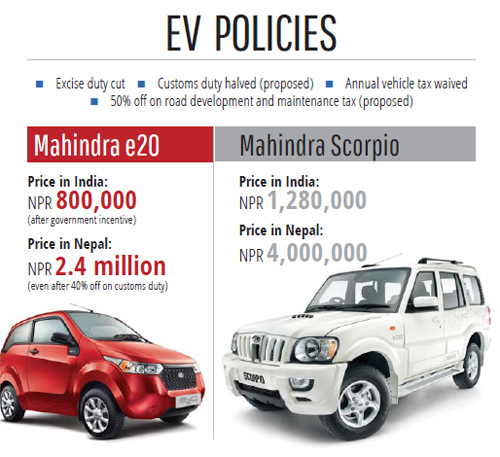
A review of various transport plans of the government over the years shows the same story: lots of promises on paper but zero result. The sixth, seventh and eighth five-year plan all mention expansion of trolley buses. The tenth five-year plan promotes the use of environmentally friendly and battery operated vehicles. Except cut the excise duty on electric vehicles, not much else has been done.
Despite immense popularity, the government discontinued the trolley bus system in 2001 and formally shut it down in 2009. In 2005, the government refused to let Safa tempos run on more popular commuter routes and began actively promoting diesel private cars.