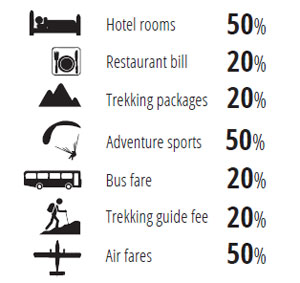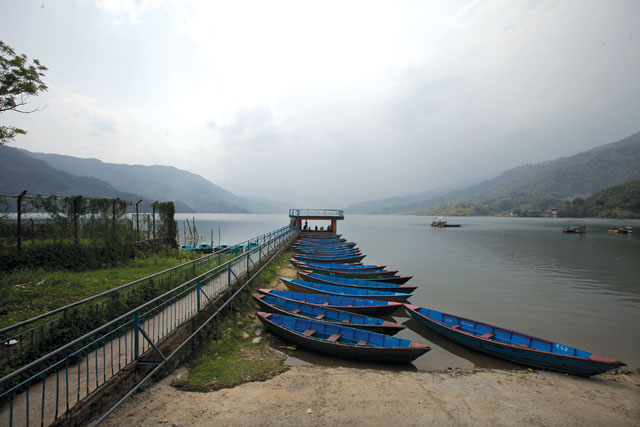
Any other year this would be peak tourist season in Pokhara, and the lakeside town would be teeming with trekkers, or those just back from paragliding, ultra-light flights, rafting or ziplining. There would have been Indian pilgrims on their way to Muktinath, or Chinese honeymooners boating on Phewa lake.
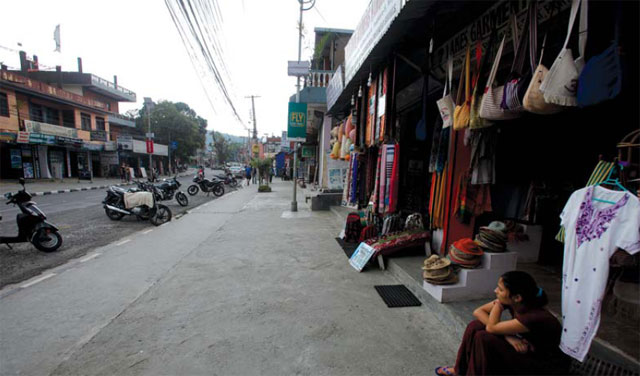
Today, Pokhara is eerily empty. Every shop, restaurant, and hotel is deserted. A fancy coffee shop that opened last year that also sells locally made t-shirts hasn’t had a customer in a week. A popular bar frequented largely by international tourists now only sees local visitors. Taxi-drivers and boatmen while their time gambling on the sidewalk.
“It was as if the earthquake swept away all the tourists,” said one restaurant owner among many who have sent their staff on unpaid leave. Pokhara serves as the gateway to treks in the Annapurnas, and it is also a favourite weekend getaway for Kathmandu residents.
International media coverage of the quake made it sound like the whole of Nepal was destroyed, and images of collapsed buildings and old heritage sites in Kathmandu made it to the front pages. Media failed to report that 80 per cent of Kathmandu’s houses were still intact, the airport was open, and that only 14 of Nepal’s 75 districts were affected.
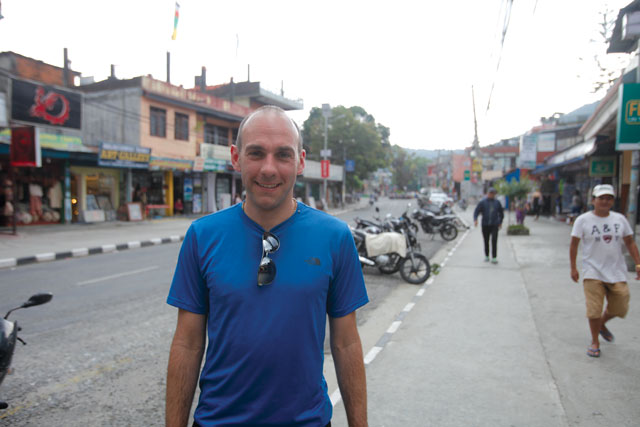
German tourist Mark Kessler (pic) who was on the Annapurna Circuit trek when the earthquake struck says he was surprised to be asked by family and friends in Germany if there were any buildings left in Nepal.
“All they had seen on the news were pictures of damaged houses and ruins,” said Kessler, who decided to stay back and is headed to Lumbini next. “I told them the part of Nepal I was in hasn’t been affected much. My stay has been great and the people have been extremely nice. I would love to come back with my mother next year.”