
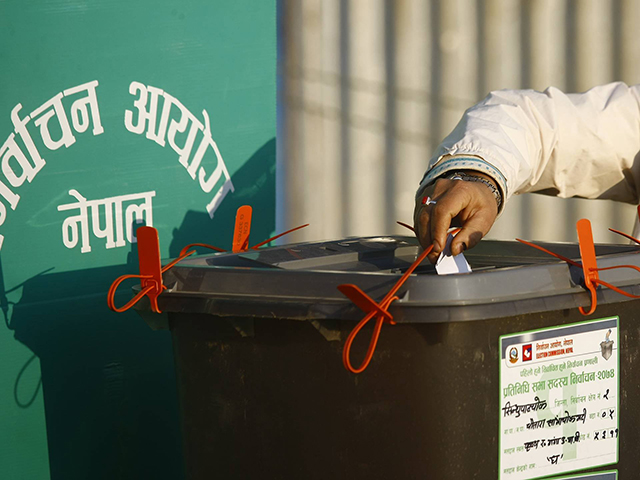
 A voter casts his ballot during the first phase of parliamentary and provincial elections at Chautara, Sindhupalchok on Sunday. Three million Nepalis from 32 hill and mountain districts are expected to cast their votes in the first election under the new constitution. Pic: Bikram Rai
A ruinous ten-year war brutalised Nepalis and pushed the country back decades. When that conflict ended in 2006, there was great hope for a peace dividend, but the country was soon mired in an erratic eleven-year transition that frayed the country’s ethic fabric, made instability and poor governance the norm, and allowed unprecedented geopolitical meddling in our internal affairs.
The end result of these 20 wasted years was that most Nepalis gave up on Nepal, and migrated by the millions. Nearly 15% of the country’s population (mostly men) is abroad today. The government has not been able to make even the most basic services affordable and accessible to those who remained behind. Remittances have not been invested in productive sectors to create jobs at home. Corruption has become so endemic that it is treated as a given. There is a criminalisation of politics and the politicisation of crime.
After travelling that long, dark tunnel, we are finally seeing a light at the end with elections to National Parliament and Federal Assemblies. This week, 32 mountain and hill districts went to the polls, and the rest will vote on 7 December. That these are historic elections, there is no doubt. It marks the last stage of the peace process that started in 2006, and it will elect the peoples’ representatives to national and seven provincial legislatures – theoretically devolving political power away from Kathmandu to the periphery for the first time.
Despite confusion about the division of jurisdictions and the chain of command between the three tiers of government, we will soon have a decentralised political structure that should ideally allow local people decide on local development. One of the reasons Nepal has been keep back is that the Kathmandu establishment thought it knew best what was good for people from Humla to Jhapa.
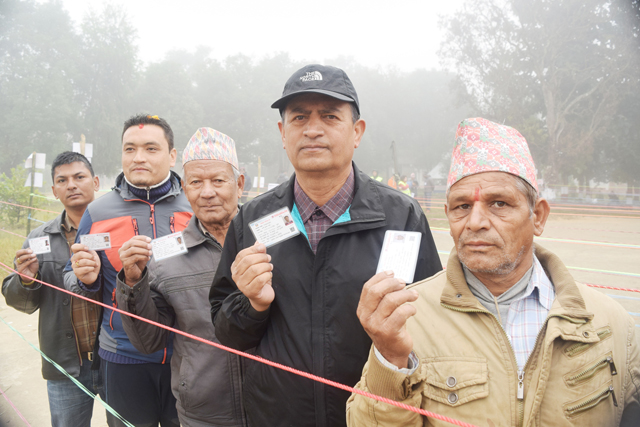 People queue up to cast their vote in Nuwakot. Pic: RSS
In a democracy, elections are a mechanism to select the most honest and more efficient managers to run the country for a limited time period. If they do a good job, there is a chance they will get re-elected in the next round of voting. Regrettably, the whole electoral process has been subverted in the past 27 years by top men in a cartel of parties which has used polls just to reshuffle the cards.