
 |
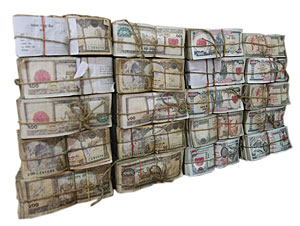
In the age of multiple TV channels and abundant FM stations and instant noodles brands, the sheer number of vapid discussions and wrongheaded analyses about the liquidity crisis should come as no surprise. The Beed of course has been swamped with questions. So where has all the money gone?
First off, real money isn't actually leaving Nepal, since the Nepali rupee is not convertible outside Nepal. This means it has museum value outside Nepal, barring some generous and particularly homesick Nepali offers to exchange it. To be sure, a good sum of funds always moves out of Nepal each year. However, the shortage of currency is really due to the long term view and efficiency of the Nepal Rastra Bank, since it takes it so long to decide when and how to print currency notes.
There is little research done on liquidity issues, so anyone says anything they want. Here is the Beed's take: the money transacted between co-operatives is probably half or one-third of the total inter-bank transactions. These co-operatives are not regulated, so noone knows where their customers have invested. The co-operatives then lend cash to individuals who buy real estate who continue to deal in cash (in order to avoid paying taxes). The co-operatives do not require clients to present their KYC (Know Your Customer), so anyone can be a client and do anything with their money. Some people wonder if this is how the dance bars in Kathmandu are funded!
The co-operatives have mushroomed since banks are too busy focusing on missionary lending against collaterals and personal guarantees. Banks do not like to take risks, so no project finance stuff, no non-recourse lending, no cash flow lending. Perhaps, as one banker friend confided in this Beed, the bankers themselves are going the chamber route, aspiring to be better at doing politics than becoming ace bankers. How else can one explain an addition of a Vice President position in the Nepal Bankers Association (NBA) to ensure that they can do away with elections? So if you have to spend so much time converting one of the most professional associations in Nepal into a political one, then where is the time to think about liquidity?