
 BIKRAM RAI |
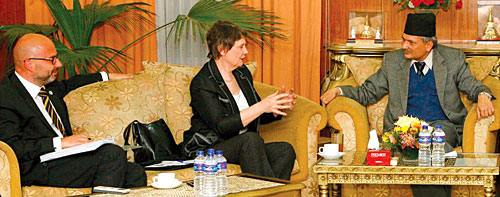
Helen Clark, Administrator of the United Nations Development Programme (UNDP) and former prime minister of New Zealand is in Nepal this week to inspect development projects. Clark spoke to Nepali Times about Nepal's progress in meeting Millennium Development Goals and the challenges ahead.
Nepali Times: With only four years to go for the MDG target date, how would you rate the chances of developing countries to meet the goals?
Helen Clark: Over the past decade, notable progress has been made on each individual MDG, including in many least developed countries and under very challenging circumstances. Business as usual, however, won't get the world all the way to achieve the MDG targets. The right mix of policies, targeted technical assistance, institutional capacity, adequate funding, and strong political commitment are necessary to accelerate progress. UNDP supports country-led development based on inclusive growth strategies which benefit the poorest and most vulnerable.
And how does Nepal's performance compare with the others?
Despite political and economic challenges, Nepal has made MDG progress over the past decade. According to the 2010 MDG progress report, Nepal is on track to achieve most targets, with a few exceptions, if the current trends in progress continue. Achievements in reducing child mortality and improving maternal health are particularly encouraging. Poverty has gone down significantly, and Nepal is close to reaching the 2015 MDG poverty target. Nepal has already achieved gender parity in primary school enrollments, but the gender gap remains high at secondary and tertiary education levels. As a former political leader in my own country, I am particularly happy to note that one-third of the seats in the Constituent Assembly are now held by women. Nepal has had the foresight to integrate the MDGs into its national development strategies, as reflected in its Three Year Plan, and I have confidence that Nepal will continue its MDG progress.
A lot of the problems in the developing world need long-term structural and governance solutions, but aren't the needs are so immediate.
Development is a long term process. UNDP works for decades in countries and helps them build the capacity to lift human development. Some face greater challenges than others, but all can succeed. It is important to align meeting short term needs with the longer term direction established, in other words, each step taken should be in support of the goals to be achieved over time.
UN staff were among the thousands who died in the Haiti earthquake last year. What lessons has the UN learnt about disaster preparedness and response from that event?
Haiti was a tragic reminder of the importance of building resilience to disaster. Disaster risk reduction measures, ensuring that humanitarian response systems are ready, and imagining the unimaginable all need to be undertaken. Effective governance is needed to achieve this, of the kind which ensures building codes are in place and enforced, land use plans are carefully thought through, and creates a clear sense of duty of care among elected and appointed public officials. International support is needed for both the humanitarian and development aspects of this work.