
|
|
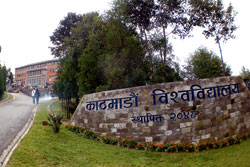
Since it was formed by an act of parliament after the pro-democracy movement in 1991, Kathmandu University (KU) has been selective about students and faculty, and has aimed for excellence.
But, as with most institutions started with one man's vision, KU faces the same challenges as the nation itself: how to adjust to the new demands of a new generation.
When Suresh Raj Sharma got together with like-minded friends retired from academia, all they had was an idea. Today that idea stands in the form of a university that has more than 5,000 students in its departments and affiliated colleges.
"We all complain that the government doesn't do enough for us, but KU is the perfect example of what we can give back to the country," says the silver haired professor, who worked his way up from an impoverished Sindhuli village to get a PhD and devote his life to education, "The country made me what I am, I have no right to complain."
Sharma has always been a doer, overcoming obstacles to ensure that Nepal can provide an international standard university education so students don't have to go abroad to study. Today KU offers intermediate, undergraduate, graduate and postgraduate level programs in science, engineering, medicine, management, education, pharmacy, environment, music, human and natural resources, information technology, and biotechnology through six schools.
Sharma's biggest challenge is ensuring quality and he admits that he is worried about making sure that new departments like biotechnology and media meet the highest standards. KU has an enviable record of student retention (85 percent), three-fourths of all students have jobs within three months of graduating, and up to 20 percent go on to further studies.
"Just providing education is never enough," says Sharma, "we have to make sure that there are jobs out there for our graduates." Since 1998, the pharmacy department alone has produced 350 graduates who are the backbone of Nepal's budding pharmaceutical industry. KU-affiliated medical schools in Nepal save the country at least Rs 40 million a year in fees that would have otherwise have gone abroad, in addition to attracting medical students from abroad.