 |
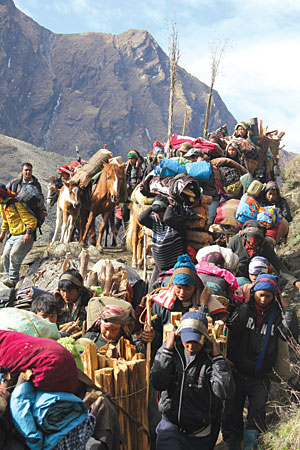
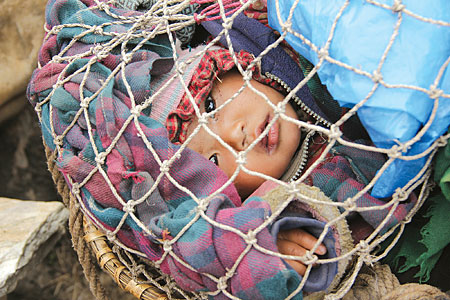
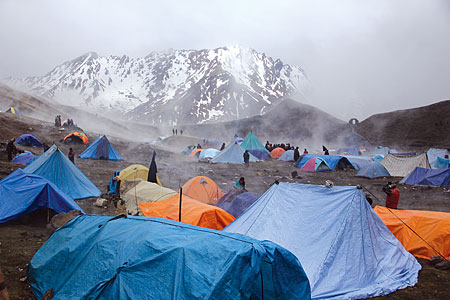
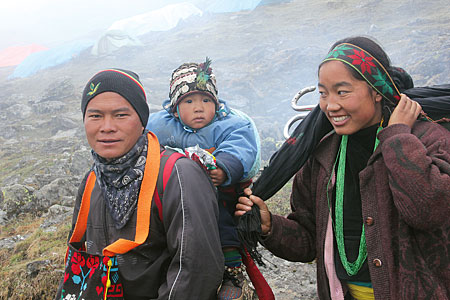
Jagraj Pun, 38, took a long breath, prayed to his ancestors and pitched his tent on the banks of the icy cold stream. His wife held their two-year-old son and heat up the raksi jar. This is going to be their home for the next two months, and the family is getting comfortable after a long trek.
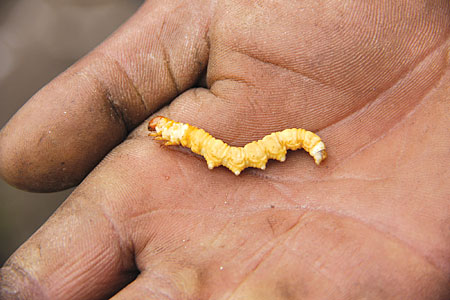
Here, in upper Rukum, it is the picking season for yarsagumba, the Himalayan caterpillar-fungus that is worth its weight in gold in China for its supposed aphrodisiac properties. Chinese medicine's demand for this creature is generating income for hundreds of thousands impoverished Nepali villagers from Humla to Gorkha.
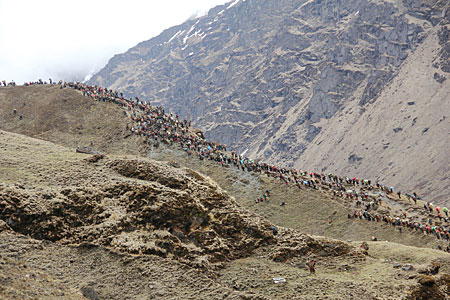
Just on this one valley alone,there are 7,000 people, some of whom have trekked two weeks, from various parts of mid-western Nepal. The pickers each pay Rs 1,000 to a committee that organises the harvesting every season and provides security from armed robbers who prey on pickers.
Many like Jagraj have come with their families, entire villages in mid-western Nepal are padlocked during the yarsagumba picking season. The trail is steep and made more difficult by the sheer numbers of people.
At their destination in Pupal Valley, the official yarsagumba picking is declared by opening a gun shot, and suddenly thousands of people fan out like ants up the grassy slopes. It is strictly 'first come first gets' because yarsa harvests decline steadily in the two months that the pickers are here.
On the first day itself Dharmajit Pun of Pelma in Tukum found 45 caterpillars, a family of six found 30, Nainkala of Thabi in Rolpa found only one, and 19-year-old Hiramati of Ranma in Rukum hadn't found a single caterpillar even by the end of the second day.