
 |
When the social discourse is so politicised, it is tempting for the media to be obsessed with the operational strategy of day-to-day politics. Which party wins and which party loses from the dissolution of the CA? Who gained the upper hand from the truncated budget? Which faction of which party holds the trump card against rivals? And so on.
In fact, no one wins and everyone loses from this prolonged political deadlock, where the only certainty is the uncertainty of it all. The aimlessness of the political parties has already collectively cost them what little support they had. There is widespread disillusionment among ordinary citizens with their mad scramble for power, and even more among the district cadre of the parties themselves.
We have often argued in this space that the only way a caretaker establishment can move forward is to forge a government of national unity. Not that a consensus is inherently desirable in a democracy or will resolve all outstanding issues, but at least it will level the playing field ahead of elections. Elsewhere in the world there is an incumbent disadvantage at elections, but here a sitting government can skew the electoral balance in its favour by arm-twisting the organs of state for advantage.
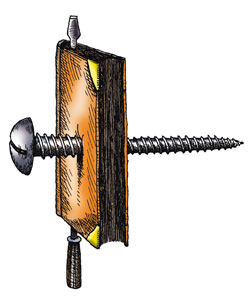
The reason things are completely stuck now is that we have a deadlock within a stalemate. The deadlock in the constitution led to the dissolution of the Constituent Assembly, and now there is a stalemate on government formation between those who want the prime minister to step down before a unity government, and Baburam Bhattarai's insistence that the opposition presents a viable alternative before he steps down. It is clear neither side is in a desperate hurry to end the deadlock: Bhattarai is perfectly happy where he is, and the NC knows an acrimonious dispute will erupt within its senior ranks between aspirants for the premier's post.