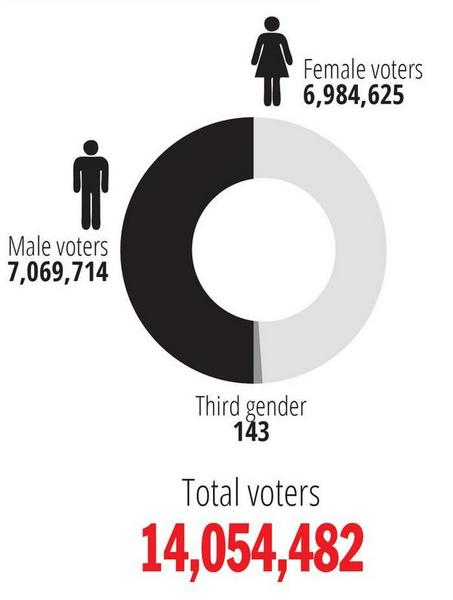
After two lost decades, Nepalis are finally getting ready to vote in local elections for 481 Village Councils, 246 Municipalities and 17 Metropolitan Cities. In the two-phased elections on 14 May and 14 June, nearly 14 million citizens will be casting their ballots for the first time under the new Constitution, for representatives in new local structures.
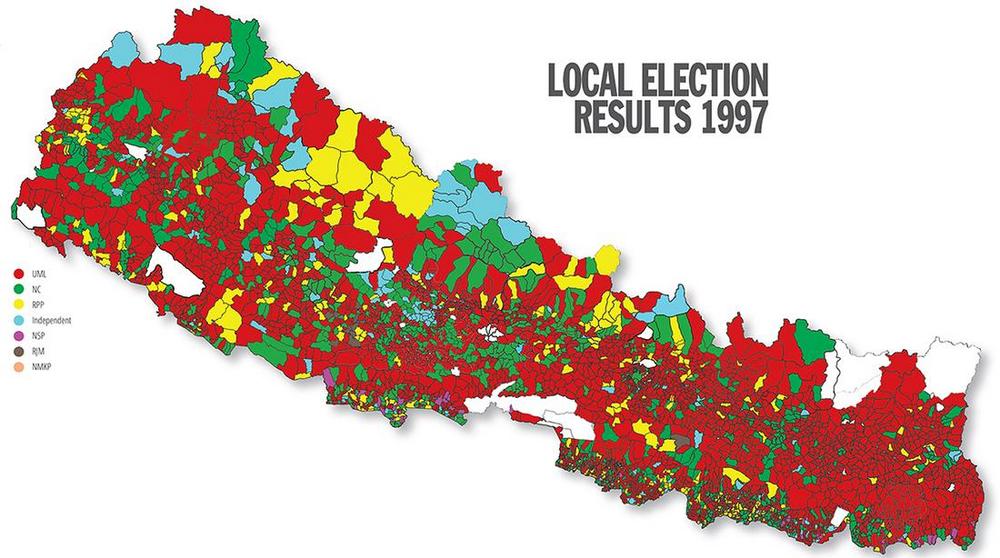
Many voters were just one year old when the last local elections were held in 1997. Those who were about to be eligible to vote then are today in their 30s. The Maoists decimated elected local councils, and the royal regime cancelled scheduled local polls in 2002. Some 9 million people are voting for the first time in their lives in local elections. The polls will be held in two phases as a compromise, to give time to prepare for Tarai-based parties, who had been threatening to boycott polls unless their demands for amendments to the constitution were met first.
This election is important also because Nepalis will be voting not for Village Development Committee (VDC) and District Development Committee (DDC) , which were effectively just local administrative units, but they will select representatives for self-governing Ward, Village, Municipal and Metropolitan councils. Under the new Constitution these are empowered to make laws, raise revenue and fix policy. There are also quotas for women and candidates from the Dalit community, and although more than 90 per cent of candidates to head village and municipal councils are men, parties are obliged to nominate a woman for one of the two senior local posts.
Whatever happens in the provincial and parliamentary elections slated for 2018, the foundations for rural development and grassroots democracy are being laid on Sunday and 14 June.
No confusion
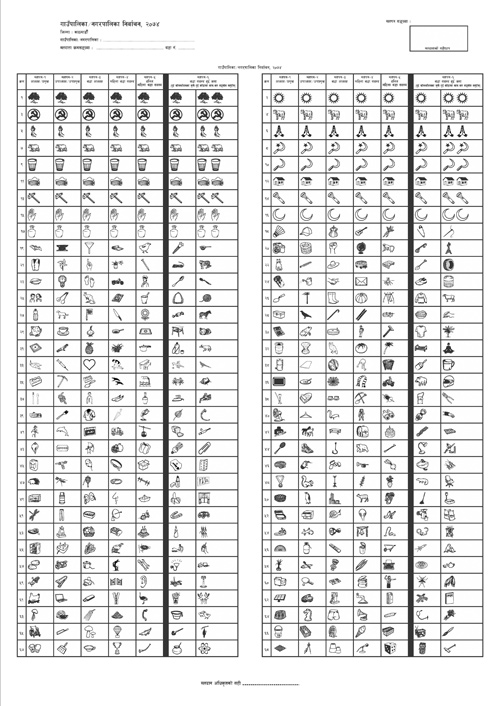
With Zero Hour in effect, candidates had to stop all campaigning as of midnight on Thursday till polling day on Sunday morning when booths will open in three provinces conducting the first phase of polls.
There is still lingering confusion among voters about how to vote correctly. In Kathmandu, the ballot paper is the size of a broadsheet newspaper. The swastika stamp has to be placed on seven boxes, and the paper folded in the proper way.
Much of the confusion stems from the use of two election symbols in the seventh column of the ballot paper (pictured). The Election Commission (EC) published a front page notice in major Nepali dailies on Thursday to try to clear the confusion explaining that the parties that have a seat in Parliament must use one symbol and the EC needed to use two of the same symbols in the seventh column to differentiate one ward committee candidate from the other.
The parties that have no seat in Parliament and independents have to use different symbol for each of their candidates. So there is just one symbol in the seventh column for their candidates. So, voters will have to stamp just once in the seventh column although there are two election symbols. The EC says it has been using the mass and social media to educate voters, but at least for Kathmandu Valley voters may feel like they are giving a multiple choice exam when they vote on Sunday.
PUBLIC PULSE
A survey in all 32 wards of Kathmandu Metropolitan City last week by the mobile polling group Rooster Logic found that there is considerable enthusiasm for local polls, but also a lack of knowledge about locations of polling booths and how to use ballot papers. The results showed a worrying lack of interest among young people 18-25, more than three-fourths of whom said they would not vote. However, 65 percent of the 394 respondents in the sample group surveyed through mobile phones said they would vote because it was important in a democracy.
Most respondents didn’t know or didn’t care about their party preferences. But Kathmandu being a traditional Nepali Congress stronghold, it was not surprising that 61 percent of those who would vote said they supported candidates with the Tree symbol. The UML and Maoists trailed behind, while Bibeksheel showed a small blip. The newly-formed Sajha Party of Rabindra Mishra and Baburam Bhattarai’s New Force did not register in this mobile phone survey.