
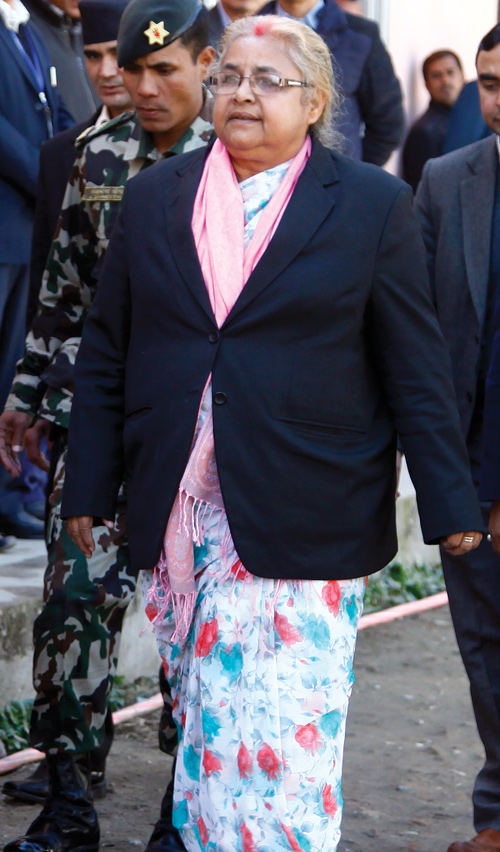
Exactly a year ago this month, Sushila Karki had just been appointed Chief Justice, but since Parliament hadn’t yet ratified her appointment she was still acting.
MPs took months even to form the hearing committee to approve the recommendation by the Constitutional Council, so she took over her responsibilities without even taking her oath. The delay affected the hearings of 11 other justices, the Chief Election Commissioner and ambassadors.
The same MPs who delayed Karki’s confirmation took no time at all to register the impeachment motion last week. But the move, spearheaded by Sher Bahadur Deuba of the NC and Pushpa Kamal Dahal of the Maoists, has triggered a huge backlash from former Chief Justices, constitutional experts, civil society, the media and the public. Some MPs from the two parties even said they were either not informed or never signed the impeachment order. The clear message of this motion is that if the executive thinks that the decision of the judiciary is going against its wish it can target anyone with the signatures of one-fourth of MPs. There is still time to withdraw this move. The much-delayed local election is taking place soon and there is great public anticipation.
This has somewhat muted the call for the withdrawal of the impeachment motion. But if it is not withdrawn, the motion will be taken as a precedent, and have a long-term impact on the separation of powers and democracy.
Karki may have lacked the deeper understanding of jurisprudence of some intellectual and dynamic justices in the past, but being corrupt is worse than having comparatively less experience. There was heavy pressure on Karki during the case against the then sitting Information and Communication Minister JP Gupta, or suspended CIAA Chief Lokman Singh Karki. But she never allowed it to deter her from what was right. She always listened to her conscience and based her verdicts on evidence.