
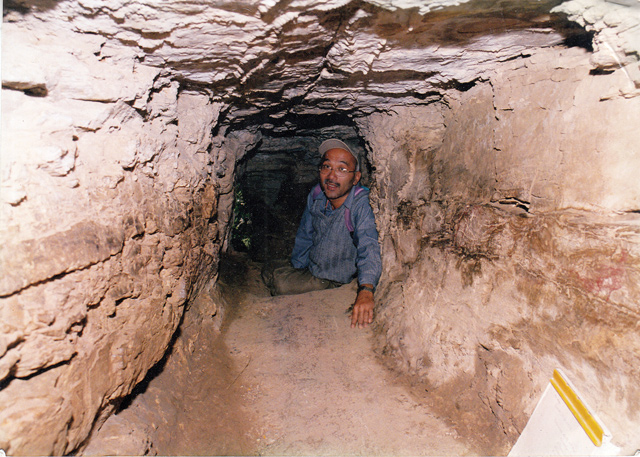
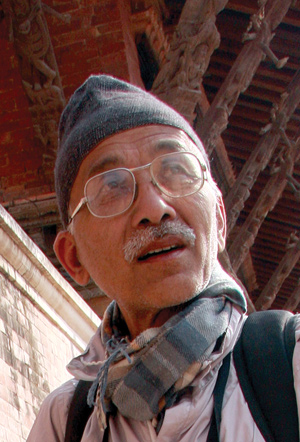
Sukra Sagar Shrestha was a wise man who spoke little but carried a large heart, and the archaeologist’s zeal. He was a cultural activist who prized rigour. His ancestral home was Kirtipur, but he would be found in far corners of the Valley’s cultural sites, photographing temple eaves, discussing inscriptions and providing sage advice on restoration, particulary after the 2015 earthquake.
Sukra Sagar was the key person to consult in the as-yet-unresolved debate over whether the Department of Archaeology should allow modern methods and material in the reconstruction of earthquake-devastated temples and other structures. He is gone before the DOA has come up with the required courage to take a position.
We have lost a critically important person in the effort to revive and energise the cultural life-force of ‘Nepal Valley’, which has been impacted by modernisation, urbanisation and the earthquake.
On a rainy August morning two years ago, we were all gathered for the chhyama puja (forgiveness ritual) at the Bhaidegah Temple, at the point where Patan Darbar Square meets Mangal Bazar. The three-tiered temple was built by the Patan ‘prime minister’ Bhagirath Bhaiyan to provide an alternative lingam after Kashi Vishwanath was sacked by Aurangazaeb in 1669.
The temple was destroyed in the 1934 earthquake and while all the other structures of the Darbar Square were rebuilt, Bhaidegah was left with a single-story stucco sanctum in ‘Mughal style’. The ritual was meant to seek forgiveness of the deity while we started the job of giving the temple its pre-1934 original size and shape.
But for some of us working in cultural restoration and rejuvenation of heritage (‘tangible’ and ‘intangible’, in UNESCO terminology), that morning was significant for another reason. That was when, avoiding the rain under umbrellas, we convinced Sukra Sagar Ji to head the campaign for the return of stolen idols of Nepal found in collections around the world.
The campaign is needed for the resuscitation of Kathmandu Valley’s Newar culture, through a methodological program to bring back gods and goddesses to the bahas and bahis, plinths and pedestals.
When Kathmandu Valley was ‘discovered’ in the 1950s by the West, the art connoisseurs were enthralled by the architecture of this medieval urbanscape that seemed frozen in time over centuries – and enraptured by the statuary that openly adorned public places. The idols, in stone, bronze and terracota, were loosely attached to the base, for who would steal a god?
But they would, because the ‘international art market’ was on the lookout for new pastures. The theft began right away, involving a network that included the overseas museums and international collectors to middlemen in Delhi, Bangkok and Hongkong – to international art scholars, diplomats, Valley elites and down to the local thug who did the actual lifting.
Before long, free-standing statues were mostly gone, and those that survived the loot were locked away behind welded cages.