
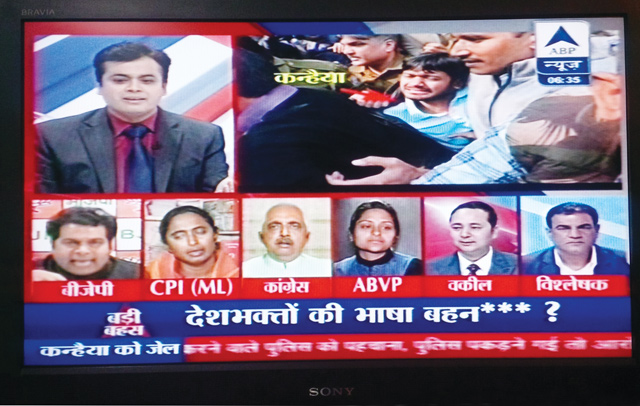
The Indian government’s crackdown on Jawaharlal Nehru University (JNU) students is only the latest among a series of attacks by the Modi government against free thought and speech.
From the way in which writers, journalists, scholars and activists are being punished in India for holding opinions different from the ruling BJP party, it seems the biggest democracy in the world is fast losing its liberal character. A government that is so intolerant towards its own people can hardly be expected to be generous towards its neighbours. And indeed in the last few months, Nepal has experienced the full scale of India’s coercive and belligerent diplomacy in the form of a five-month border blockade.
It must be sufficiently clear by now that the blockade was not India’s stance for inclusion and democracy in Nepal as some tried to portray it. The New Delhi establishment doesn’t really protect those values inside its own borders, couldn’t care less if it is nurtured in other countries. But the Modi administration appears to have realised it bit off more than it could chew, and wants to reset ties during Prime Minister Oli's visit.
In reality, contrary to its image as a vibrant democracy with space for diverse views and ideologies, today’s India has become an inhospitable place for dissidents and minorities where even harmless criticism can invite the wrath of the government and a radicalised fringe.
NGOs are strictly controlled, human rights workers are denied visas and movements for autonomy and self-rule are brutally suppressed. Politics in India today is a volatile mix of religious fanaticism and ultra-nationalism. So, we can only speculate what led Nepali progressives to support Modi and his troupe as they imposed an illegal, inhuman and morally deplorable blockade against Nepal.
If anything, the growing intolerance in India should be worrying for smaller countries in the region that are still learning the ropes of democratic governance. As India becomes less and less free, its foreign policy will become more and more restrictive with repercussions for regional security and stability.