

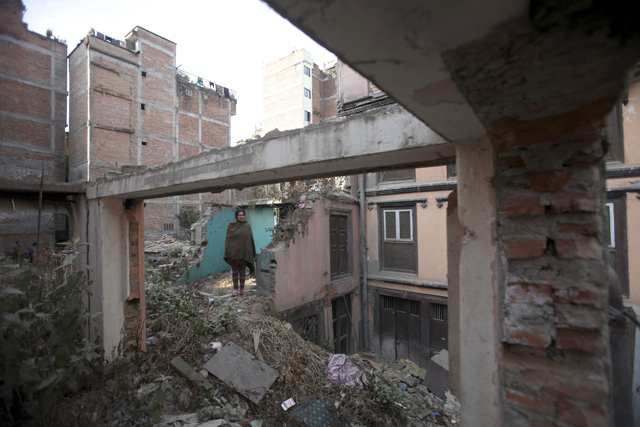
Two years after the earthquake, there is some justified worry about slow reconstruction. However, we are not much slower than the pace after other disasters like in Gujarat and Pakistan which took more than five years for reconstruction.
In Nepal, official reconstruction only really started after December of 2015. We also have to look at the governance structures that underpin reconstruction. As it is, we barely spend 40% of the development expenditure in the annual budget. How can we expect reconstruction to be 100% on target with the structural constraints, despite all the efforts of the government and partner organisations for reconstruction.
If we are to tap this opportunity and make our buildings safer, we need improvements in institutional mechanisms and systems. This process can be painful, long and slow. If people were free to rebuild however they wished, it would of course be faster. But we are trying to build back better with financial and technical assistance and ensure compliance. Reconstruction will pick up momentum as we go along.
We may also have raised public expectations too high after the International Conference on Nepal’s Reconstruction in July 2015 when billions were pledged by donors. The public perception, fed by politicians and mass media, was that there was all this money and that reconstruction would take place immediately.
One area in which we failed was to respond to the need for transitional shelters until permanent structures were built. On average, 50,000 houses are constructed in Nepal every year, but we need to build more than 700,000 homes in five years. This is an enormous task, and demands much more human resource, material supply and other support.
Local response was slowed by the absence of local elected bodies and the lack of coordination between various agencies. However, we are on the right track, we just need to remove the impediments to speedy rehabilitation. We may also need to be more flexible in various types of approved building technologies, adhering to safety standards.