Sarita Thapa was only 11 when her father was disappeared by the army, the same day Congress politician Govinda Poudel was killed by the Maoists in Bardiya. For 17 years, Thapa was carrying the weight of her father’s loss in her heart until she met others like her while working to get stories of conflict survivors.
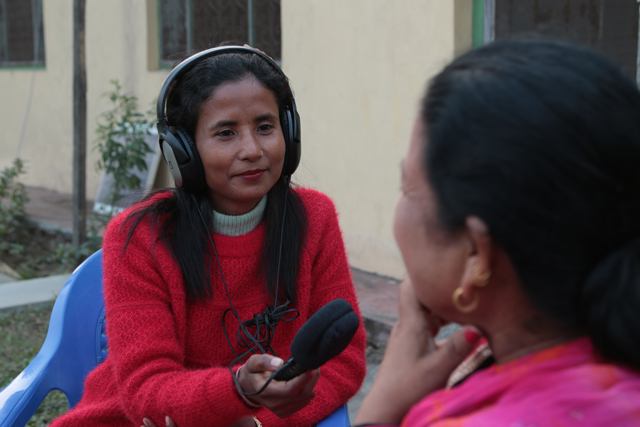
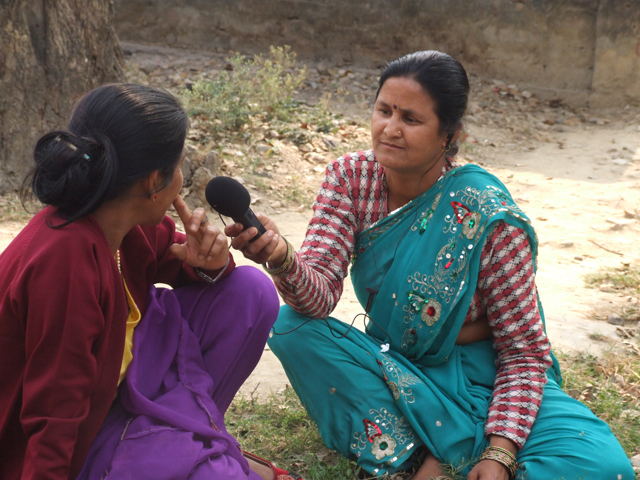
“When I compare my pain with them I see how similar our problems are. I forget my own pain,” said Thapa, now 28. Thapa is part of The Story Kitchen (TSK) which has been training 19 others like her to collect, record and prepare radio reports of the victims of the conflict and their relatives. There are reporters each in Jumla, Kalikot, Rukum, Rolpa, Surkhet, Dang, Bardiya, Banke, Kailali and Kanchanpur.
A selection of 26 programs by the group has already been broadcast on Radio Nepal, and syndicated through FM stations around the country.
“We read Nepal’s history and it is always about what the men have done, we wanted to present the women’s narrative, to look at major events in history from a woman’s perspective,” said TSK’s Jaya Luitel. In the last five years, the Kitchen has documented stories of Nepal’s conflict told from the perspective of women. Last month, the organisation was presented the Tomorrow’s Peace Builder award by Peace Direct based in London.
The reporters are given recorders and trained to conduct interviews and approach victims with sensitivity prior to being sent to the field. A member of the National Alliance of Women Human Rights Defenders serves as a coordinator in each district, and the reporters say journalism has boosted their confidence.