It started within hours after the earthquake struck two years ago. As if in fire-drill mode, the Kathmandu Valley Preservation Trust (KVPT), along with Patan’s local community, immediately went into action to salvage precious religious objects from the ruins of fallen temples.
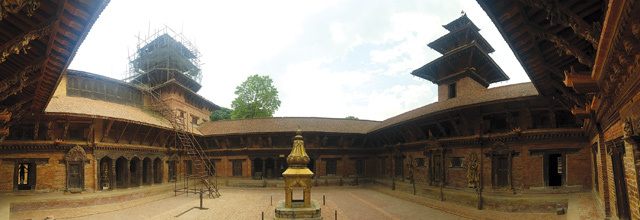
Volunteers collected carved wooden columns, stone and metal figures of deities, even the bronze
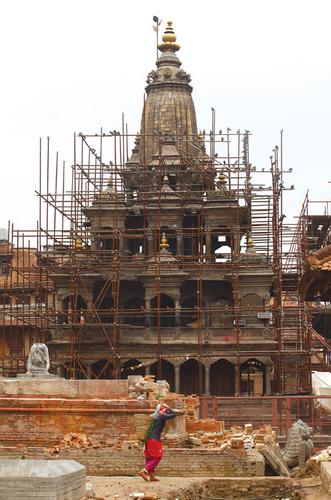
that had toppled, and put them in the Patan Museum courtyard for safekeeping.Two years after the earthquake, the monuments of Patan Darbar Square are encased in steel scaffolding, awaiting careful restoration and rebuilding.
“If the funds come in on time and there are no bureaucratic hurdles and controversies, the monuments here can be rebuilt in three years,” says KVPT’s Rohit Ranjitkar, hinting that it can be a big ‘if’.
While the debate between the purists and modernists delays reconstruction of other monuments in the Valley, restoration in Patan is in full swing. Architects are clear about preserving the integrity of the historical configuration while ensuring seismic strengthening, introducing modern materials only where and when necessary.
“The idea is to reconstruct in a way that ensures human safety. If introducing a small metal nail ensures that the monument will last longer, why not do it?” asks Ranjitkar. “Conservation is always controversial but we need to move forward instead of wasting time splitting hairs.”
With the help of donors and the local community, KVPT has repaired the statue of Yog Narendra Malla and installed it back on its stone pedestal. It has repaired the east wing of Sundari Chok, which had collapsed in the earthquake, and work is underway to complete the interior layout of the exhibits of the museum by September.
The upper part of the North Taleju Tower, which was destabilised by the quake, will be repaired in two months. While the structural consolidation for the interior is completed, the team is working on completing the bronze shikhara finial.