Perched on top of terraced slopes and commanding a stunning view of Bauddha Himal, Barpak was once famous for its bucolic setting popular with homestay backpackers, relatively good infrastructure and round-the-clock electricity.
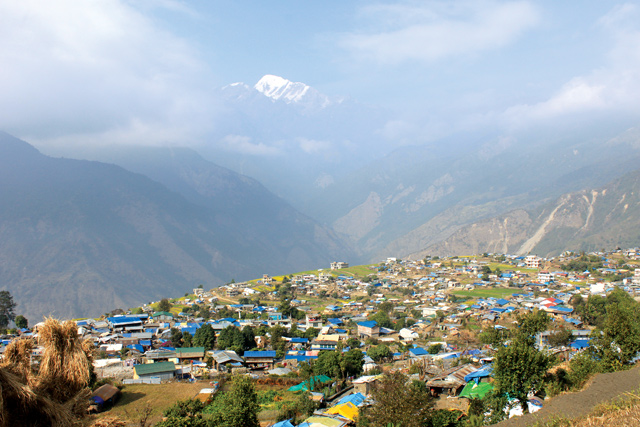
Scenic Barpak with Bauddha Himal in the background. All pics: Ayesha Shakya
All of that was destroyed in the 25 April earthquake. Now, eight months later, as the temperature dips to minus at night most of the town’s 15,000 residents continue to live in flimsy makeshift shelters. With remittance from Gurkha soldiers, Barpak is better off than most other villages in northern Gorkha, it got a lot of media attention and emergency relief in the weeks after the quake.
But even here rebuilding houses has been agonisingly slow. Rubble from collapsed structures still lay strewn across the village and only a handful of houses have been rebuilt. If this is the situation in Barpak, one can imagine what it is like in remoter settlements like Uiya and Keraunja.

Hover over the map for more photos. Interactive map by Ayesha Shakya
“We believed the government would help build our homes, but after waiting and waiting we have realised that we have to rebuild our village on our own and not rely on others for help,” says mason Durga Bahadur Ghale.
Local families are reluctant to build for fear that they may fail to comply with earthquake-resistant building codes and not be eligible for the government’s promised Rs 200,000. Regardless of this, the commitment to rebuild the town far outweighs the uncertainty and this is reflected in the collective effort of townspeople to widening the narrow cobblestone alleys.
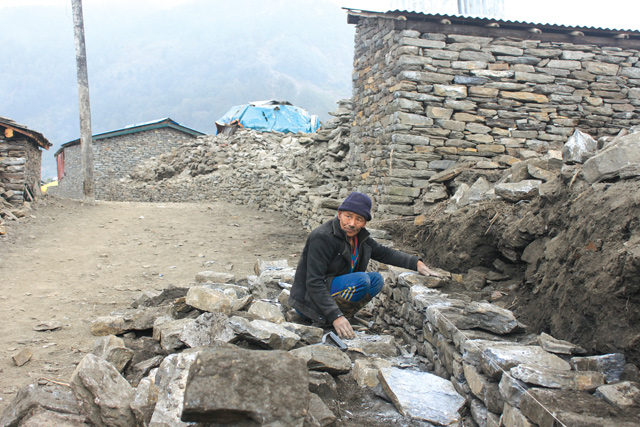
STICKS AND STONES:A mason takes a break from building a traditional stone house.
“There were plans to widen roads before the earthquake but it was not possible without demolishing many houses. However, the earthquake reminded us about the importance of wider roads for safety and emergency services,” explains Yam Bahadur Ghale of the Bauddha Himal Academic Boarding School.
Along with fostering strong community values, the reconstruction has also become an opportunity for locals to earn food rations. Every fortnight, the World Food Programme (WFP) and its Food for Assets initiative distributes rice and lentils to those involved in reconstruction.
“Food for Assets enables people to be actively involved in urban renewal, but such efforts are needed from the government’s side as well,” says pioneer community leader Bir Bahadur Ghale who put up a microhydro plant here in the 1990s, long before the rest of the district was electrified. The 130 kilowatt plant was destroyed in the earthquake, and is being rebuilt.
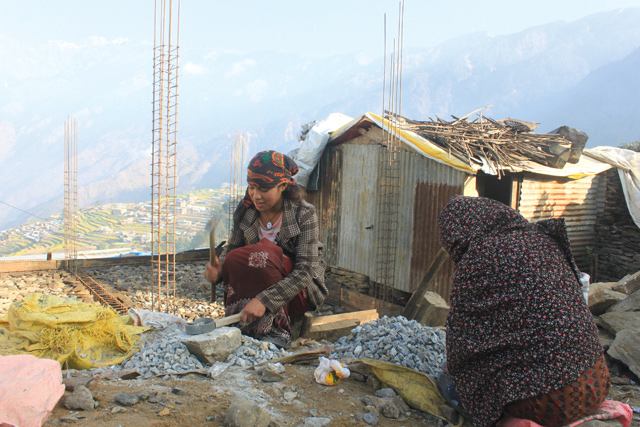
A woman crushes stones at a reconstruction site in Barpak.
With support from the US-based Gorkhaly Foundation, a diesel generator used to provide power four hours every evening, but that has been reduced to two because of the fuel shortage.
Says Bir Bahadur Ghale: “Electricity is necessary to power tools in reconstruction, and people here are used to electricity so we have to restore the service as soon as possible.”