The double impact of the earthquake and blockade pushes already deprived region into deeper crisis this winter
KUNDA DIXIT in GORKHA
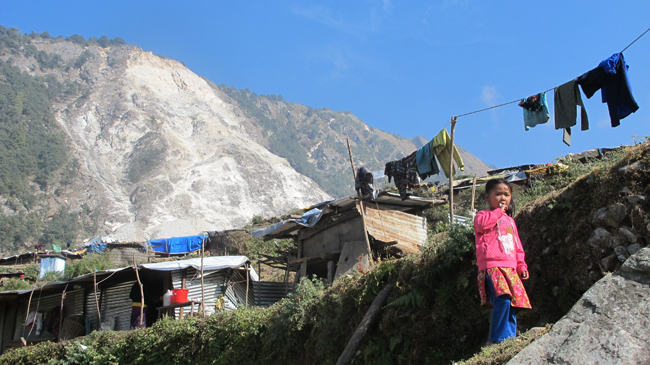
Beneath a deep blue Himalayan sky and hemmed in by mountains on all sides, winter has come early to the villages of Upper Gorkha. The pastel green Budi Gandaki tumbles past the settlement of Ghap, which used to be a busy stop for trekkers on the Manaslu trail before the April earthquake.
The earthquake destroyed the Nubri Primary School in Ghap. But delays in approving standard designs for schools and budget allocation for rebuilding means that seven months after the earthquake, students are taking lessons in 30,000 tented classrooms like these across the mountains of central Nepal.

Down the Valley in Phillim, it is the same story. Eighty students at the residential Buddha Secondary School spend nights in tents because dormitories were damaged by the earthquake. The girls are crammed into a small room in one of few buildings still intact.
For Principal Mukti Adhikari an even more pressing problem is finding enough rice to feed the children. Landslides triggered by the earthquake blocked the trail so supplies haven’t got through. Even the helicopter lifeline is disrupted now because of the blockade.
“The first blockade was the caused by the earthquake, this is our second blockade,” says Adhikari ruefully. “If we can’t find rice we have to close the school and send the children home.”
The blockade hasn’t just hit transportation of supplies to these villages cut off by landslides. A shortage of raw materials in Kathmandu means relief agencies haven’t been able to source enough sleeping bags, blankets and tent material. Even supplies that are available cost up to three times more now.
It is not just the blockade that has deepened the misery of the estimated 2 million people in 14 districts who are facing winter in makeshift shelters. Political disarray in Kathmandu has meant that the Reconstruction Authority is not functioning, and much of the money pledged by international donors lies unspent.
Relief agencies and private groups who were filling the gap have now been hit by the fuel crisis and haven’t been able to get urgent supplies out before winter. The UN, which was operating five MI-8 helicopters had to ground them because of a funding crunch and lack of fuel, and there is a backlog of 1,000 tons of supplies to airlift before it terminates operations by end-December.
“We are concerned that delays caused by the lack of fuel will lead to a second humanitarian crisis this winter,” says the head of DFID in Nepal, Gail Marzetti, “the situation is serious especially for children and the vulnerable.”
DFID has been supporting the airlifts to remote areas, and also works with partners to distribute supplies and manage shelters in hard-to-reach places like Prok, Keraunja and Tsum.
“Our immediate priority is get thicker tents, blankets, sleeping bags, gloves, foam mattresses and smokeless stoves in the next week to as many shelters as possible,” says Sudip Joshi of the Czech relief agency, People In Need, which mobilises local communities to design distribution to the most vulnerable groups first.
Despite the challenges and setbacks, Gorkha is cited as the district which has managed earthquake relief best, coordinating the activities of nearly 100 relief agencies since April. CDO Udhhav Timilsina is a no-nonsense bureaucrat who is impatient to see results, and he is angry about the delay in getting rice to the school in Philim.