Photos: Gopen Rai
Looking down at the newly-declared municipality of Panchkhal from the Arniko Highway is a sight that has come to define the landscape of the 15 mountain districts affected by the earthquake three months ago. Hundreds of bright spots of light reflect the morning sun off new tin roofs of temporary shelters.
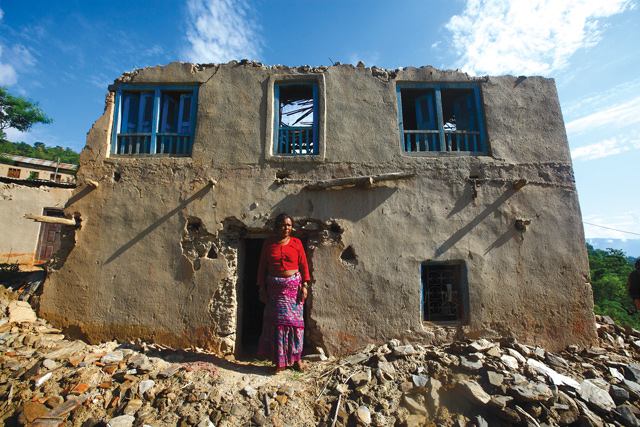
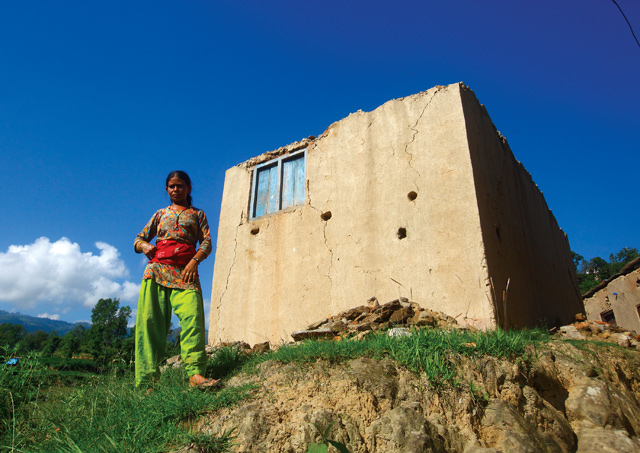
Just off the road in Ward 5 of Panchkhal, 56-year-old Dev Kumari Mijar has been living since April in a hut fabricated entirely of corrugated tin sheets. Her brick home nearby bears the scars of the earthquake and is too unsafe to live in.
“That is where I have been living since the earthquake,” said Dev Kumari, pointing to her shed that has its roof and walls made of corrugated sheets. The Rs 15,000 that the government gave out was not enough, so she had to sell gold ornaments to buy another Rs 10,000 worth of tin. “I don’t know if I can afford to rebuild my house,” she said, adding she couldn’t afford to tear it down either.
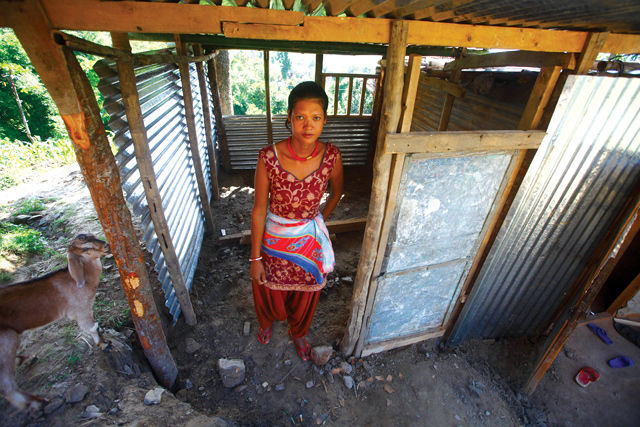
BUILDUP: Kamala Mijar a daily wage earner couldn’t even finish building a temporary shelter as the Rs 15,000 provided by the government was not enough to buy needed material.
Kamala Majir, 29, finally received her Rs 15,000 last month after being given the runaround by local officials. But even that money is not enough to buy roof sheets and timber to build a temporary shelter. As a single mother of a 10-year-old daughter, Kamala cannot even afford to complete her unfinished shelter. Rebuilding her destroyed home is a distant dream.
“I barely save anything from what I earn. I have to send my daughter to school and manage the household,” said Kamala, who started living alone after her husband took a new wife.
Up the hill, 80-year-old Bal Bhadra Majir hasn’t received his Rs 15,000 because his name was not on the list of those made homeless. Wrinkled and gaunt, he lives in a bamboo and tin shelter, looking out at the ruin of what used to be his house which he has no hope of rebuilding.