
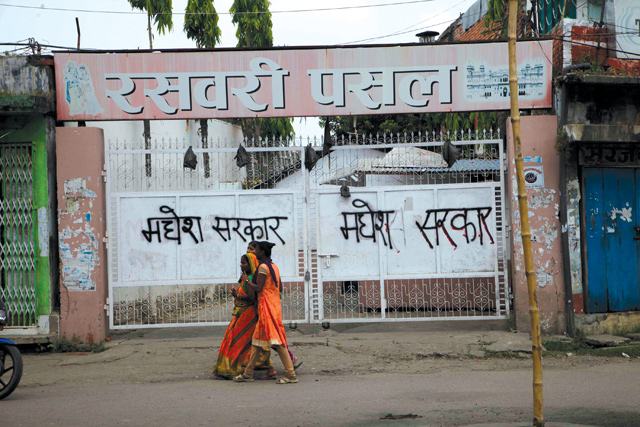
After the constitution was promulgated on 20 September, the Madhesi parties agitating for amended provisions in the new constitution changed their tactic of demonstrations and shutdowns and started blocking the border with India.
One week later, as Nepal reels under a shortage of fuel and other essential commodities the top three parties, which pushed through the constitution, have formed a three-member committee to negotiate with the disgruntled Madhesi parties and talks are expected to begin in a couple of days.
But what are the major demands put forth by the Madhesi parties? They are not different from the seven points that India reportedly pressed Nepal to address.
The Madhesi parties want the five disputed Tarai districts to be in two plains provinces, rights for naturalised citizenship holders to assume important posts like President and Prime Minister, proportional representation in all state organs and demarcation of electoral constituencies in proportion to population.
Are these demands genuine, and are they too difficult for the government to address? Madhesi leaders belonging to the top three parties say two of these demands are genuine and can be easily addressed. But they say the other two, if addressed, will hurt the long-term interests of Nepalis.
Nepal’s 2007 Interim Constitution adopted principles of proportional representation in all state organs. The new constitution has partially incorporated them. In its preamble, the new constitution states that an equal society shall be created on ‘the basis of principles of proportional representation’. In Article 285, it again states that principles of proportional representation shall be adopted to appoint civil servants.
But the word ‘proportional’ is missing in the fundamental right to social justice. The new constitution merely talks about principles of inclusion in state organs. The Madhesi parties are suspicious that the top three parties are trying to wriggle out of the earlier provision. They believe that the word ‘proportional’ was deliberately omitted to exclude already-excluded communities.
“Madhesi parties have misinterpreted it to spread the lie that 45 per cent of government jobs will no longer be reserved for them,” says Mahendra Yadav, a Nepali Congress (NC) member of the parliament. “This is not a big issue, and it can be resolved through an amendment.”
UML’s MP Satrughan Mahato says the top three parties are ready to include this word even in the fundamental rights. “It can be addressed in the next parliamentary session,” he says.
UCPN (M)’s MP Surendra Prasad Jaishawal says the demand for demarcation of election constituencies in proportion to population is genuine and the top three parties are ready to address it.