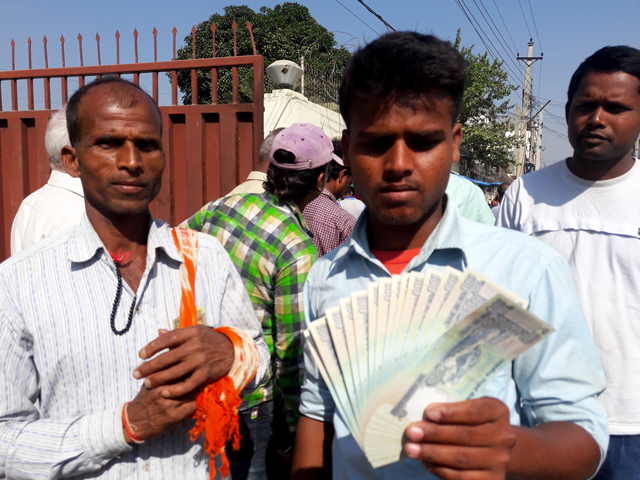
Harindar Mahato of Birganj (pictured, above) was preparing to take his wife to Madhubani in India for medical treatment last week. He had saved up INR 10,000 – all in high denomination 500 and 1,000 notes.
But on 8 November, Indian Prime Minister Narendra Modi made the surprise announcement to ban those notes saying India needed to weed out black money and counterfeit currency. Just like tens of millions of Indian families, Mahato’s hard-earned money suddenly became worthless.
He rushed to the Birganj office of Nepal Rastra Bank the day after the ban, but it had stopped exchanging Indian currency.
Birganj is the corridor for 80 per cent of India-Nepal trade and INR serves as a parallel currency here. India’s demonetisation move has shaken Birganj’s economy, which was just beginning to recover from last year’s blockade.
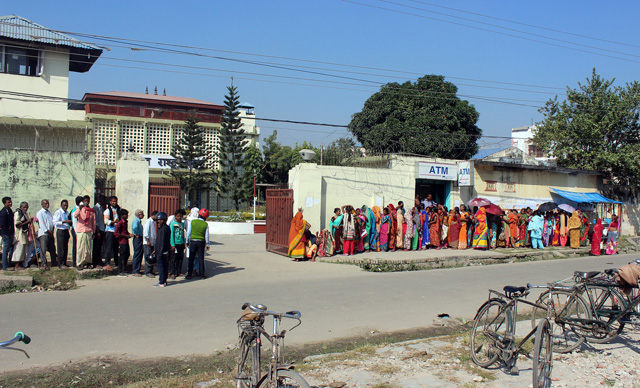
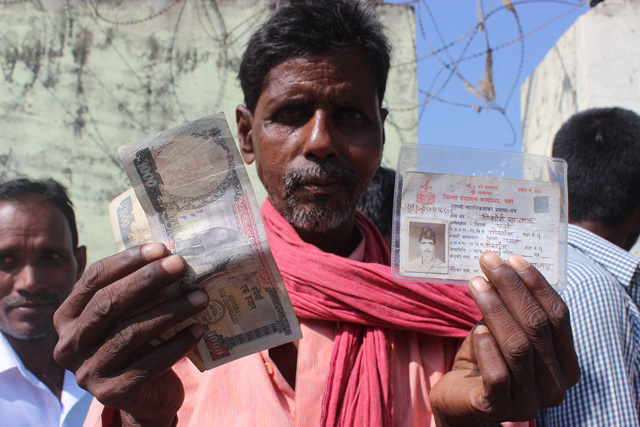
Rastra Bank resumed changing Indian currency two days ago, and hundreds of men and women lined up to change the weekly INR 1,500 limit by showing citizenship certificates. But they still cannot change Indian 500 and 1,000 notes.
Mahato exchanged Indian currency by showing his citizenship certificate on Wednesday, and went to the bank on Thursday as well with the citizenship card of a relative. His sons also queued up with their own citizenship cards to exchange more money.