
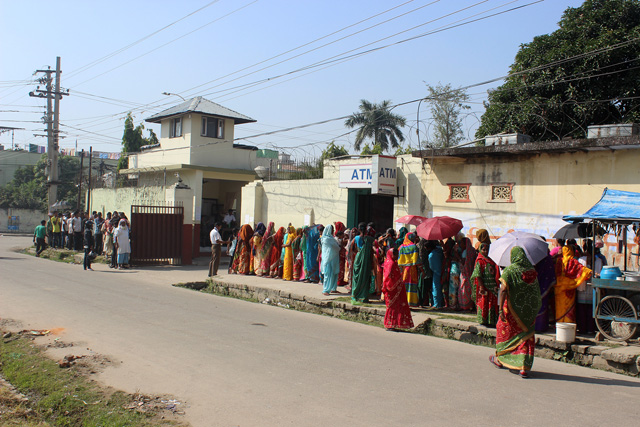
 Hundreds of people line up to change the weekly INR 1,500 limit by showing citizenship certificates at the Birganj branch of Nepal Rastra Bank. Picture: Jiyalal Sah
Just like Nepalis queued up to buy fuel last year, all over India people are now lining up to exchange their high-denomination currency notes.
In a shock move ostensibly aimed at weeding out black money, Indian Prime Minister Narendra Modi declared Rs 500 and Rs 1,000 notes illegal and asking people to exchange them at banks within 50 days.
But banks failed to distribute sufficient low-denomination notes, and there is chaos, anger and frustration across India. And it has affected Nepal too like an aftershock of last year's Indian blockade.
Early this week, Nepal's business leaders met Prime Minister Pushpa Kamal Dahal and asked him to provide exchange facility for the demonetised Indian notes in Nepal. Dahal then called Modi and sought necessary help.
But the estimated 2.5 million Nepali migrant workers in India are the hardest hit by demonetisation, and they are helpless and voiceless. "We cannot buy food with our hard-earned money," says Baldev Bhattarai of Dadeldhura, who has been working in Punjab."If I go to exchange money, I lose my income. If I do not go, I have no money to buy anything," he added.