
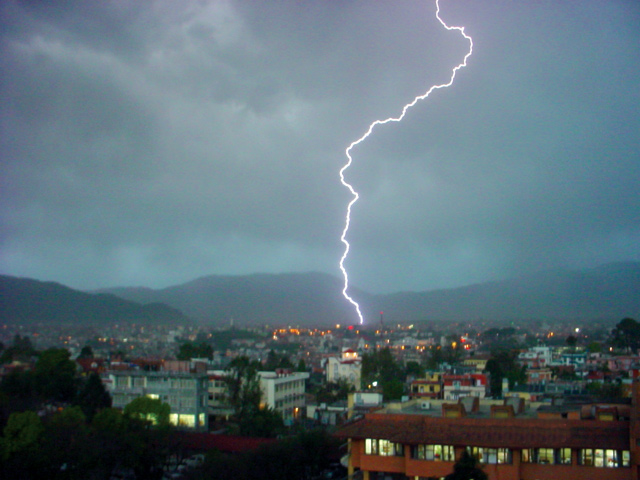
When it started raining on a stormy afternoon last week, workers at a brick kiln in Chitwan district ran under a tree for shelter. Lightning struck the tree, killing two and injuring nine of them.
Nepal’s storm season got to a deadly start, and Dinesh Majhi, 13, and Rita Rai, 24, became the first fatalities from lightning this year. They are unlikely to be the last.
More than 100 people are killed by lightning in Nepal every year, with most of the fatalities in the pre-monsoon season. Thunderbolts have killed 547 people in the last five years, higher than any other natural calamity barring last April’s earthquake. Not even floods or landslides kill as many people, and government figures show the numbers are rising every year.
The Ministry of Home Affairs has been recording deaths caused by lightning since 2000. From 2010, the number of lightning fatalities has started exceeding 100 every year. One reason for the increase could be more accurate reporting of deaths due to lightning after the setting up of the National Emergency Operation Centre (NEOC) six years ago.
However, there also appears to be a correlation between the frequency and intensity of storms and global warming. Says climate scientist Ngamindra Dahal: “It is not just that we have been recording lightning fatalities more actively now, they are indeed increasing and getting more deadly because of the increasing intensity of storms.”
A 2014 report in the journal Science states that lightning strikes are likely to rise by 50 per cent in the US within this century if global warming continues at the current rate. Nepal’s location on the southern slopes of the world’s highest mountains means it could get worse here.
Source: NEOC. Map by Sahina Shrestha and Ayesha Shakya