
Six weeks after the earthquake, the ground has gradually stopped shaking but political aftershocks in the capital have spread uncertainty about the lifespan of the government at a time when it is preparing for a meeting of donors later this month.
The meeting was first mooted by the Japan government, but Nepal wanted it in June itself so it could plan its 2015-16 budget with funds earmarked for reconstruction. Then, Indian Prime Minister Narendra Modi sent his close adviser PK Mishra, who was also Chief Executive Office of the Reconstruction Authority of Gujarat, to Kathmandu two weeks ago to propose that the meeting be held in New Delhi, which Prime Minister Sushil Koirala declined.
In the run-up to the Kathmandu meeting, which is to be co-hosted by Japan, the National Planning Commission (NPC) on Wednesday recommended that an empowered Reconstruction and Rehabilitation Committee led by the Prime Minister be formed to rebuild Nepal over the next five years.
The NPC is also readying its Post-Disaster Needs Assessment (PDNA) report by 15 June, which will form the basis of the government’s request for international assistance at the conference.
However, Kathmandu-based diplomats told us that time was too short for their government to come up with pledges at the 25 June conference, and that they expect it to be a “planning meeting” for a “pledging conference” at a later date.
The UN Office of Coordination of Humanitarian Affairs (OCHA) issued a fresh appeal this week for what it estimated were 2.8 million Nepalis in need of humanitarian assistance. The world’s aid response so far has been disappointing, and the UN’s Nepal Humanitarian Coordinator Jamie McGoldrick said: “I urge the international community to show its solidarity and support this effort.”
In its revised flash appeal OCHA sought $422 million for food, temporary shelter, medical care and drinking water in 14 districts for the first five months. Only $119.6 million has come in.
“Countries never get as much money as they require, but it is a bit discouraging that the UN has not even received 30 per cent of the required funds,” NPC head Govind Raj Pokhrel told us.
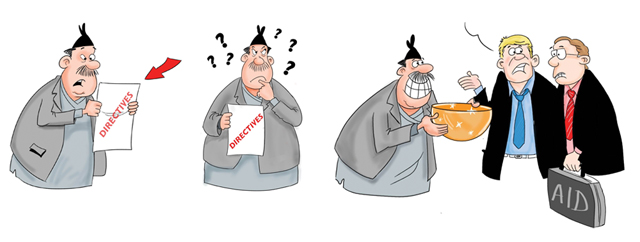
One of the reasons for donor wariness is concern about transparency and effective relief delivery. The new agency proposed by the NPC and the needs assessment plan is expected to allay those fears and ask donors to pledge money for 23 areas like infrastructure, health, education and heritage.