Lhakpa Wongchu Sherpa and I set out from Shishapangma Advanced Base Camp on 25 April in heavy snow, limited visibility, and a gentle breeze that left the long string of prayer flags blowing gently in the wind. Despite the weather, we felt warm and safe in the mountains as we began to make our way up to Depot Camp at 5800m.
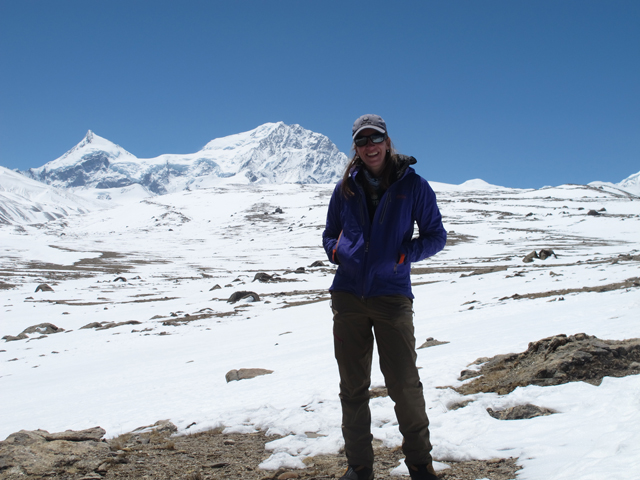
Heather Geluk below Shishapangma, the world's 12th highest peak in Tibet before the earthquake. Photos: Sherpa Adventure Gear
It was a long, slow plod over a maze of rock, mud and snow with limited opportunity to appreciate the mighty mountain vistas hidden in the mist. We’d only been teased with fleeting views of this 8025m summit, the 14th highest in the world.
I had been planning this ‘Himalayan Double Header’ expedition for six months: climb Shishapangma from early April to mid-May and then travel overland to climb the 6th highest mountain in the world, Cho Oyu for a mid-late May summit. If successful I would be the first woman in 23 years to have done so and the 2nd woman ever.
When we reached the Depot Camp, I sat reflecting on my passion for mountaineering. Mountains provide context, they are humbling and make you realise there are forces in nature that will never be harnessed, that won't bend to our schedules. Rather, we bend to theirs. Coming from a consulting job that demands structure and planning, I find this lack of ‘control’ in mountaineering an opportunity for reckless mental and physical creativity liberating.
I was tired but content. I took a sip of water and looked down at my watch. 11.55am. My ears picked up a faint, deep rumbling sound that broke the silence and sparked an almost animal-like instinct. Something wasn't right. The rumbling continued, louder and louder.
My initial instinct was that this was an avalanche, but where was it coming from? We were literally surrounded by mountains on all sides and had zero visibility. The ground then began to shift back and forth in a slow rhythmic movement. Earthquake.
Lhakpa shouted over the roaring sound of falling rock and ice. Through the mist we tried desperately to establish the direction from which the avalanche would come. We huddled next to a rock, our eyes darting in all directions, hugging each other, terrified, praying that the rumbling and shaking would stop.
In what felt like an eternity, the seismic shifts beneath our feet finally subsided. As we fearfully made our way back to Advanced Base Camp, we noticed the impact of the quake and the avalanches of snow and rock it had released. There were fresh cracks in the ground, loose boulders dislodged, cracked ice in the lakes. Almost eerily, the snow stopped and the cloud lifted, and rather than a scene of destruction and devastation, the mountain vista stretched out before us seemed almost beautiful, natural and strangely rebalanced.
Back in Advanced Base Camp we learned that the earthquake had been widespread but were limited to the details by an almost complete lack of communications. It wasn’t until our evacuation from the mountain and arrival back in Kathmandu on 5 May that I began to realise the full scale of the disaster. I’d only heard about the tragedy on Everest but hadn’t prepared myself for the bigger picture. It was overwhelming, at a scale unprecedented to my senses and any previous frames of reference.