Historic town will formally open again to visitors from 15 June
The first thing a visitor notices missing at the entrance to Bhaktapur is the toll gate where tourists were required to pay Rs 1,500 to enter the historic town. Twenty-five per cent of Bhaktapur was destroyed during the 25 April quake, but the town is rising from the dust and preparations are underway to open it again to tourists from 15 June.
Photos: Karma Gurung
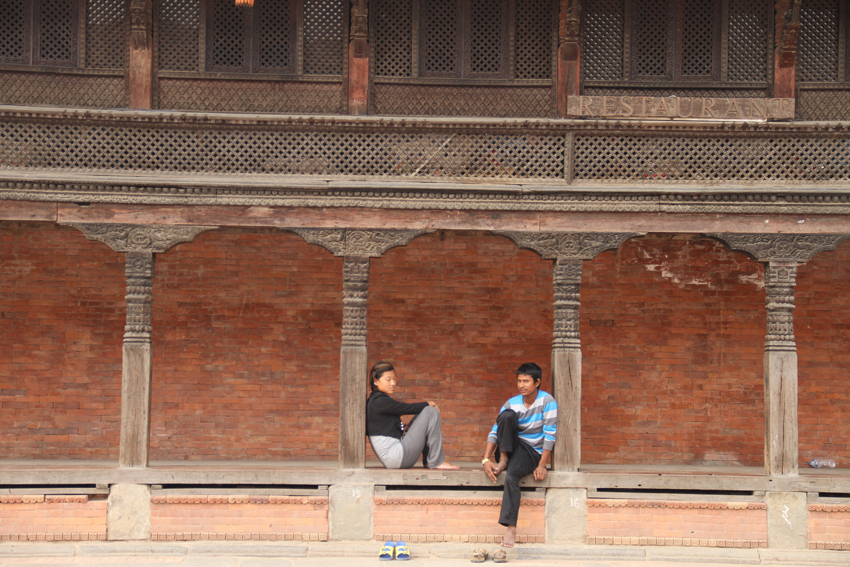
Today, Bhaktapur probably looks like what it did before it became such a big tourist attraction. There is damage to its homes and monuments, but the town is once again populated mainly by the descendants of those who built this majestic town.
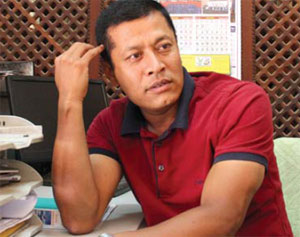
“Every day I come here for the quiet,” said Mohan Bhaila, a French-speaking tour guide who now lives with his sister after his home was destroyed. “For me, this place is my friend. I never get bored here. It is my favourite place.”
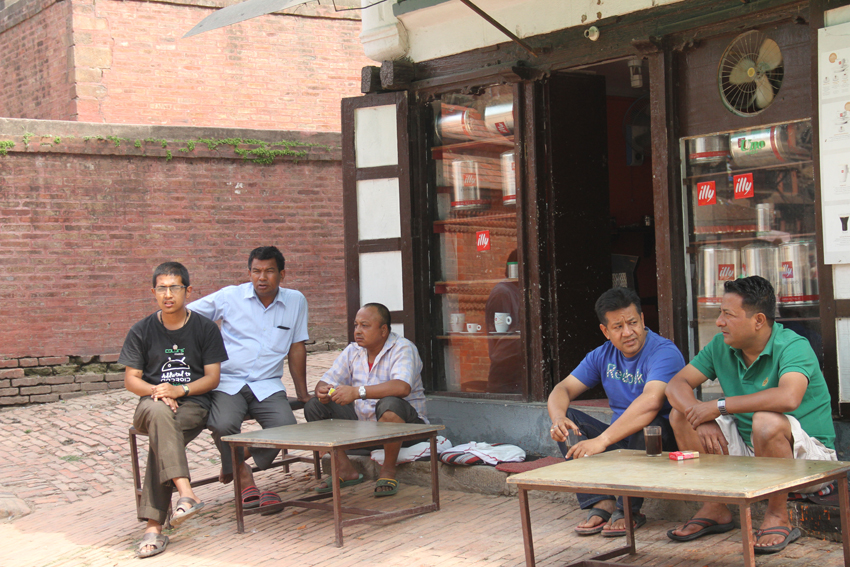
Stoops and steps along the lane leading down from Darbar Square to Nyatapola are full of shopkeepers sitting around drinking tea. The traditional festivals are still taking place, but without the usual throng of tourists.
Since the municipality has stopped collecting visitor fees, there is no exact count of the number of tourists, but they have been replaced by Nepali visitors who have come to see the destruction. Dinesh Babu Hada, who owns a kulfi stand, is not complaining since his customers are mostly Nepalis.
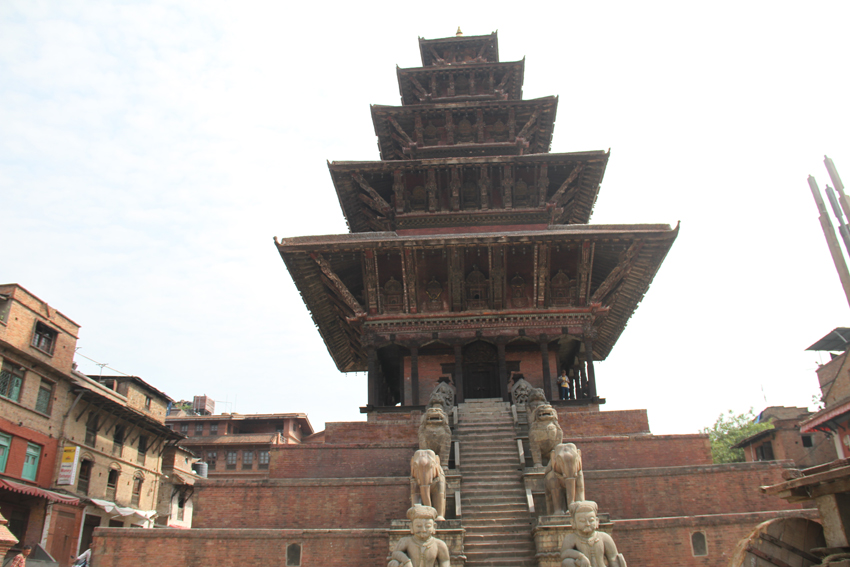
Despite the damage, many visitors are surprised at how much of Bhaktapur is actually intact. The Nyatapola (pic, right), Nepal’s tallest temple, still stands tall and proves that even though tragedy has struck, what is best endures. So is the Dattatreya Square.
Few tourists have started trickling in, as much to see the earthquake damage as to admire the monuments and Bhaktapur’s unique charm. Some are climbing temple steps for selfies just like in normal times.
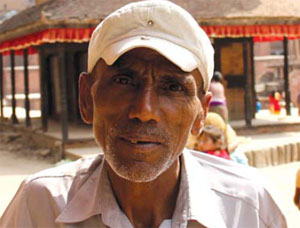
Pottery Square was a popular stop for many tourists before the quake, and although much of it is taken up with relief tents and rubble, there is still a thin elderly man who spins his stone wheel inside a doorway near the entrance. He lets visitors take his seat, dip their hands into a bucket of wet clay and spin their own pot. He guides them through the process with his own deft, weathered hands.
A third of Bhaktapur’s guest houses have not been able to open, either because of structural damage, owners having to live in tents, or simply because there are no tourists. However, some popular lodges have opened, so this may be the time to visit Bhaktapur to see how it is coping with the disaster, and help its economy.
Sharmila Mulepati of the Pagoda Guest House which overlooks the Darbar Square says only two of her 19 rooms are occupied. “Even the relief workers have come and gone, and we are short-staffed, but there are reservations starting August,” she said.
The handicraft shops that used to do brisk business are open, but there are few customers. Rajendra Shrestha of Masterpiece Handicrafts told us that he used to be open 15 hours a day, but now opens only four hours in the middle of the day. He hasn’t had a customer all week.
The Bhaktapur Tourism Development Committee is carrying out a damage assessment of the lodges, shops and cafes so it can help them rebuild. Bhaktapur normally gets 300,000 visitors a year, bringing in Rs 150 million just in fees, but this year the number is expected to go down.
But Tourist Information Officer Damodar Suwal says he is optimistic: “We have to be.”
“Every brick is historic”
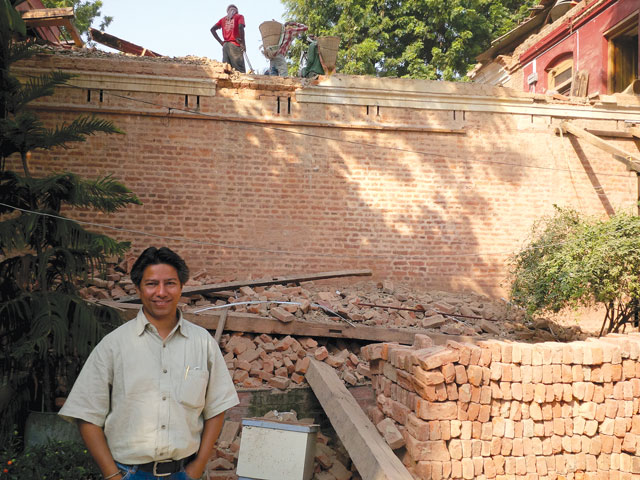
For heritage conservationist and Bhaktapur native, Rabindra Puri (pictured,above) the destruction by the earthquake of his hometown was tragic. But he says it provides an opportunity to rebuild the town by adhering even more closely to the Malla-era style that gives Bhaktapur its unique charm.