
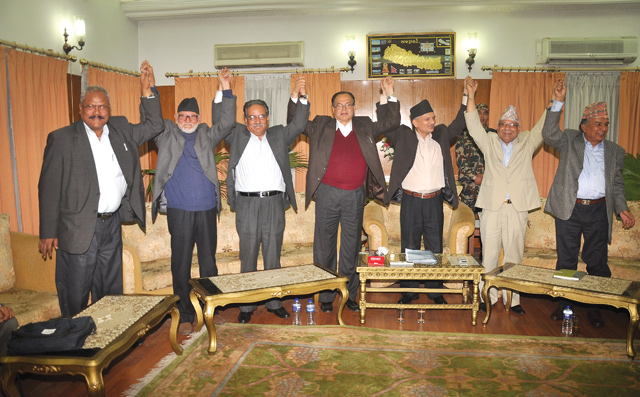
Seasons change, times change, fashions change and even our national crises change, from constitutional to natural disaster to economic blockade all in a row, yet somehow Nepal’s political leadership stays forever the same. The very system of governance has morphed from absolute monarchy to multi-party democracy to Pointless War to royal coup d’etat to Feuding Democratic Republic, yet the same old tired faces attend the same old meetings as if nothing’s changed at all.
Which, for them at least, it hasn’t. Holding a meeting to sort out problems created in previous meetings seems to be an end in itself and the best way for our leaders to look busy while still enjoying the snacks and perks of office. But the question remains: why aren’t these discredited individuals ever thrown out?
A closer look has your scribe suspecting the noble concept of parliamentary democracy was no match for the hierarchical system so deeply ingrained in Nepali society. Through selective adoption of democratic principles our leaders have created a sham Potemkin democracy, while maintaining the rigid party hierarchy that suits their purpose. External criteria such as elections and party conventions are fulfilled to keep the donors happy but the inner workings of each party are hollowed out, tightly controlled by senior leaders who stifle any attempt at internal democracy.
In most countries, parties strive to select the most qualified leader with the best chance of winning an election. Here, the most senior stalwart gets his turn and hangs on forever, spending more time returning favours than actually governing. Whether that person is the best choice for the party and country is irrelevant, demonstrating the historic transition from age-old monarchy to modern democracy is superficial at best. Within each party’s chain of command the static mindset of royal privilege remains unchanged and firmly intact. Instead of having one king, Nepal is now burdened with a dozen petty rajas each jealously guarding their party throne.
Time honoured though it may be, the custom of constantly deferring to one’s elders is largely responsible for the country’s current mess. This mindless deference, and lack of critical thinking it engenders, originates in the traditional family structure and passes seamlessly into the realm of democratic politics, despite being deeply anti-democratic by nature.
It’s probably no coincidence the country’s oldest party has the country’s oldest leaders. Congress was the personal fiefdom of Girija Prasad Koirala until he breathed his last, passing on the mantle to Sushil, his loyal yet ancient nephew. The times cried out for dynamic leadership, with Nepal teetering on the edge of chaos as Sushil teetered on the edge of the podium mumbling incoherently, but nothing could stop the imperative of hierarchy. Party and country be damned, which they were, but at least Sushil got his turn, which was the whole point.