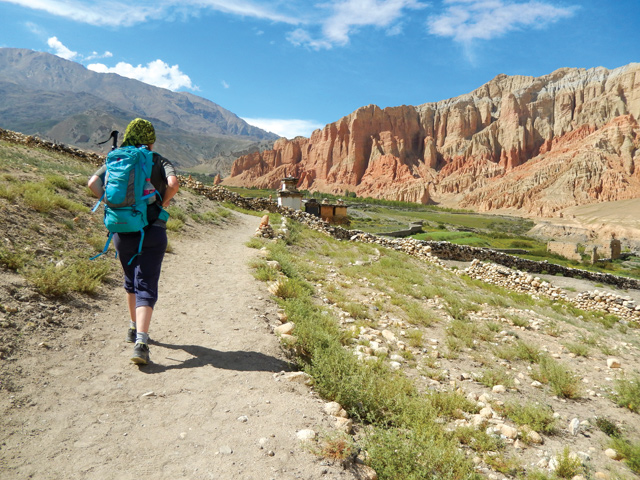
SOLITUDE IN MUSTANG: A lone trekker walking past the spectacular red cliffs of Dhakmar. ALL PICS: STÉPHANE HUËT
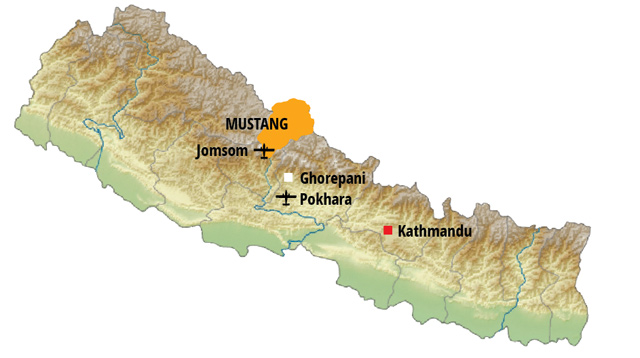
This time last year, the Annapurna Conservation Area Project (ACAP) had issued nearly 1,700 permits for Upper Mustang for the trekking season. This year, it is only 667.
Although it did not suffer any damage in the 25 April earthquake the economy of this rugged and remote trans-Himalayan region has been hit hard by the fall in tourism.
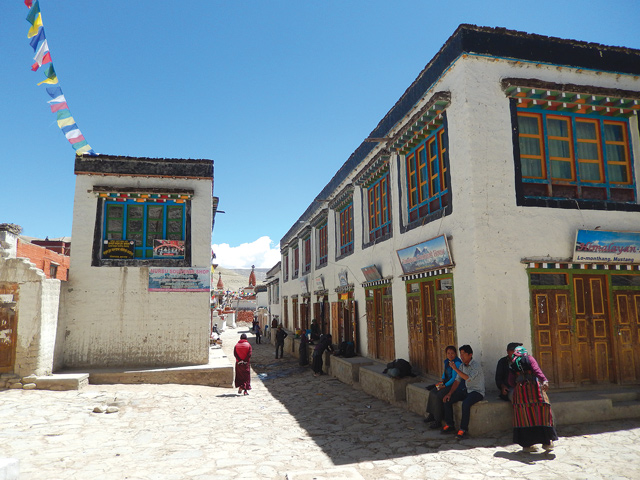
Lo Manthang's shops are all boarded up.
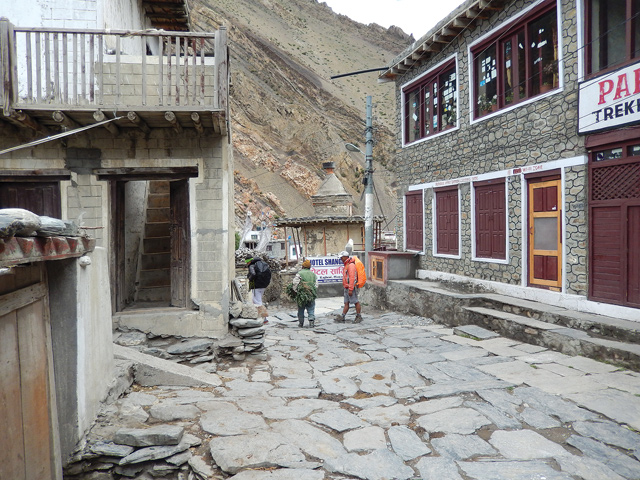
Guide Rupak Roka in Kagbeni with just one trekker.
Only less than half the seats on a recent Pokhara-Jomsom flight were occupied. The only other visitors on a recent trek was a French couple, Camille Niguin and Thomas Peverelli, at a guest house in Dhee.
“We had been planning a Mustang trip for over a year and didn’t feel there was any reason to be afraid or cancel,” said Niquin. “Two months have passed since the earthquake and the infrastructure here is just fine.”
The couple were told by many locals they were the first trekkers to visit the region after the earthquake. The two are next headed to Dolpo on a 20-day trek. “The best way to help Nepal is to visit and consume local goods,” said Peverelli.
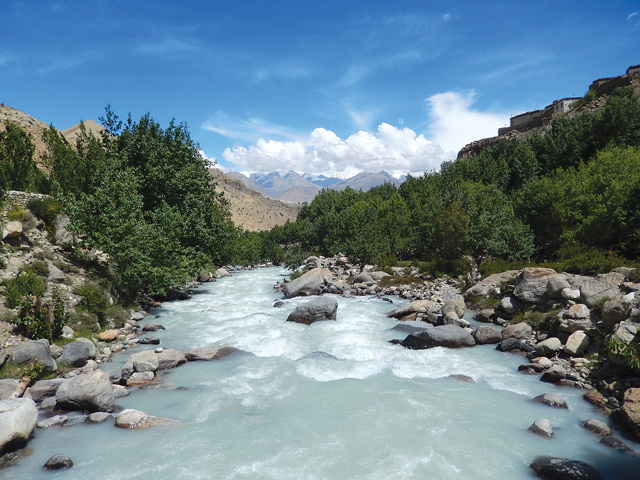
A stream near Ghami.
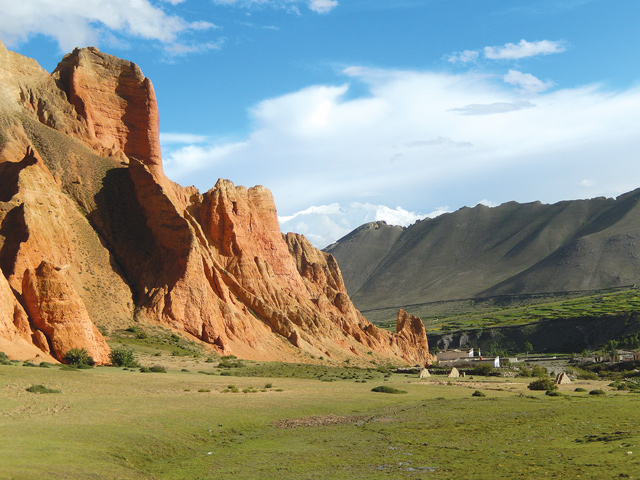
Dhakmar's cliffs catch the late afternoon light.
While the French couple downplayed the fear of a bigger earthquake coming there are locals who are still worried. “We understand why tourists wouldn’t want to come at this time, even we are scared,” said Kunga Gurung, a guesthouse owner in Ghiling who still sleeps in a tent even though no house in the village was damaged.
In Lo Manthang, however, the royal palace is damaged and closed to visitors. Both the king and queen of Mustang are now in Kathmandu. Shops here are deserted, but dejected traders keep them open hoping customers will show up.
The Mystique Himalayan Hotel in Lo Manthang has received only 10 guests this year. Manager Ram Bahadur Gurung says last year he got ten times more tourists. “We had a lot of bookings for this season, but they were all cancelled after 25 April,” he said.
The mood is even gloomier in Dhakmar, famous for its red cliffs, where all hotels are closed and the owners have moved down to Pokhara.
Some here say trekkers could be attracted if the government removed or reduced the $500 ACAP fee to enter this restricted area.
ACAP’s Narendra Lama, however, is skeptical that the government will agree to reducing the fee to $100 as proposed by the Tourism Recovery Committee in Pokhara.
Rupak Roka, a local guide, put it in characteristically simple words: “Tourists should come now, they can have Mustang to themselves, and it is safe. This is the time to visit.”