
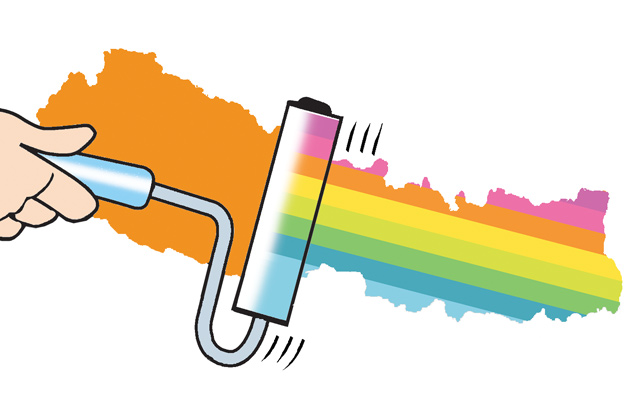
After waiting eight years Nepal’s politicians finally patched together a new constitution and it was promulgated on 20 September. There is now a glimmer of hope that one of Asia’s poorest countries can make up for lost time to ensure political stability and economic growth for its long-suffering people.
However, the fact that it was greeted with fireworks in Kathmandu and police firing in Janakpur drew attention to an unprecedented and dangerous ethnic cleavage within Nepal. It also exposed a divergence in the international community: India and the United Nations were isolated as the only two not to welcome the constitution.
Indian Foreign Secretary S Jaishankar’s frantic and futile last-minute visit to Kathmandu, the official Indian statement and subsequent pronouncements and leaks by the Ministry of External Affairs in New Delhi have chilled bilateral relations to a point not seen since the Indian blockade of Nepal in 1989-90.
Eschewing diplomatic lingo and resorting to blunt verbiage has all but obliterated the gains made by Prime Minister Modi in smoothening relations between India and Nepal during his visits here last year. By giving the impression that they were passing on instructions to Nepal’s leaders about what to do, and by discounting a democratic exercise in constitution-building, India come across as being needlessly mean. Across social media, it has provoked an angry reaction antagonising even Nepalis otherwise sympathetic to India. Politics is about perceptions, and the perception in Nepal is that New Delhi has gone too far.
This is bad for both countries. Nepali leaders do tend to play victim and won’t pass up the chance to play up Indian heavy-handedness to mask their own shortcomings. Our leaders provoked the Indian reaction by ramming through a constitution without listening to Tarai voices.
But the Nepali public’s understanding is that India is bullying us again, and this is most counterproductive for India’s own national interest. We understand there is no monolithic ‘India’, and there are many factors at play here. The divergence in Nepal policy within the Indian administration among various MEA factions, the rivalry between intelligence agencies, the interest of the Indian Army which has 60,000 Nepalis in its ranks, the open disagreement between Prime Minister Modi’s advisers and the bureaucrats, and the interests of the state governments bordering Nepal. State assembly elections in Bihar next month also seem to be a factor.
Nepal has gone through dramatic political transformation in the past ten years. Prime Minister designate K P Oli has his work cut out to: immediately tone down the self-congratulation, urgently bring the dissenters back into the fold and kick-start the economy.
The three parties must go out of their way to start to heal the ethnic polarisation between hills and plains. Compromise amendments to the constitution, especially regarding federal boundaries, could be one move. But Nepal’s politics will always be unstable as long as development is stagnant, and there are no jobs – politics affects the economy which in turn impacts on politics.