
In the larger scheme of things, the petty games that politicians play to keep themselves relevant should not matter much. They have done it year after year, decade after decade — it’s the same plot and even the characters are the same.
An impoverished, disaster-prone country should have more things to worry about: climate change, the exodus of the young and able, or a moribund economy. But Nepalis are doomed to be consumed by politics of the worst kind. The collective energy of this nation is spent on who gets to preside over the government and how to unseat the incumbent that is only weeks into its tenure. Everything, including suffering of earthquake survivors due to government apathy and incompetence, is secondary.
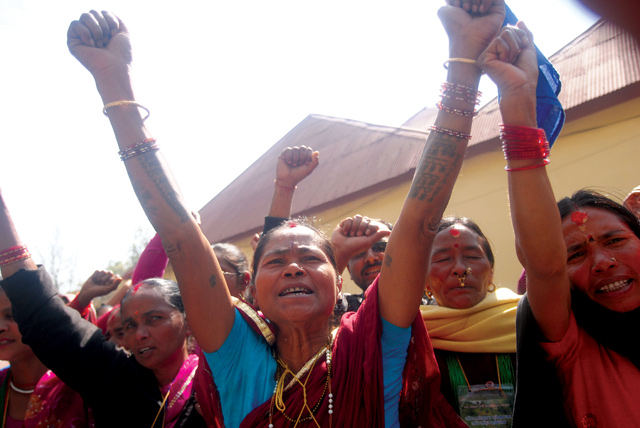
If it wasn’t for the enormous potential that this country possesses, it would have been difficult not to be enveloped by cynicism and crippling despair. For 20 years a grassroots, non-violent social movement has been slowly sweeping across the country organising the poorest and the most marginalised to live a life of freedom and dignity. It has 100,000 members who are landless, land-poor, former Haliyas, Kamaiyas, Kamlaris and Dalits and they have been spearheading a struggle for land and agrarian rights in Nepal.
The National Land Rights Forum (NLRF) has obtained land titles for more than 39,000 landless and tenant farmers, and has played a pivotal role in the introduction of the Joint Land Ownership Policy, helping to establish equal ownership of land for women. It was a result of a long struggle that culminated in an eight-day sit-in by a thousand landless women in Khula Manch.
The advocacy of this group along with other Dalit organisations was instrumental in ensuring inclusion of the provision that guarantees land to landless Dalits in the new constitution. Several progressive land provisions in the constitution, including a stop to forceful evictions, stem directly from the work done by this movement. The Dalit chairperson of NLRF, Lyam Bahadur Darjee, told me recently: “The new constitution uses the exact words we proposed on ending dual land ownership.” In a society where power has traditionally been exercised through control over land, those without land ownership lie at the bottom of social and economic hierarchy. The poorest in Nepal are those who do not own the land they till. Excluding the landless has been one of the ways to maintain Nepal’s unequal power relations. It is no surprise that Dalits both in the hills and plains are predominantly landless.
To see a campaign led by some of the most deprived and marginalised communities in Nepal effect policy level changes amidst uncooperative and at times hostile state institutions, proves how powerful and transformatory social movements can be. More than anything else, for me, it was also an affirmation of the power of non-violent action and activism. Full disclosure: I work in an organisation that collaborates with the NLRF, but I witnessed the power of community empowerment with my own eyes.