
|
|
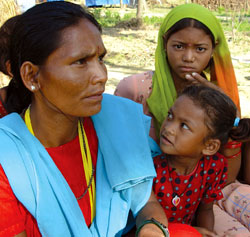
Sushma Tharu, 14, and her parents never really stopped being enslaved. "Almost every day, most of us children go to sleep on an empty stomach," says Sushma, who had to quit school to get married as her parents simply couldn't afford to feed or clothe her any more.
Sushma is one of the over 100,000 former kamaiya Tharus 'liberated' six years ago when the government banned bonded labour. In the early 60s, thousands of Tharus were 'bonded' to high-caste landlords in southwest districts like Dang, Banke, Kailali, Bardiya, and Kanchanpur to work for free until they paid off all their family debts-usually all their lives.
Now, though free, they live in fear of new exploitative employers, hunger, and illness in the camps. Patu Tharu, 50, says that though he's happy to be free of his old master, he and his wife must survive on what grows on their tiny plot of government-issued land, and his wife must still work for employers, who work her for 18 hours a day and pay her Rs 300 a month.
"What freedom is this?" he asks bitterly. "There was no alternative for us but to fall into a similar trap as before. The hardship and exploitation continue for us," he adds.
There are a large number of kamaiya families like Patu's, resettled in makeshift huts in Banke and Bardiya districts. Their living conditions are squalid and they were relocated with little thought of what they would do later. Thousands of ex-kamaiya children can't go to school, as they must work to supplement their parents' livelihood. Most work long hours for little pay as construction workers, factory labour, domestic servants, cleaners, and porters.