

During the peak of the 10-year-long Maoist conflict, children were often collateral damage. Apart from recruiting child soldiers, the Maoists strategically targeted schools and closed them down. They said the education system needed to be overhauled.
Twenty years down the line, a Maoist is prime minister for the third time, but the education system has not improved. The disparity between the public and private institutions is bigger than ever before. And when the state does intervene, it does for all the wrong reasons
Excerpts of the report published on issue #154 18-24 July 2003:
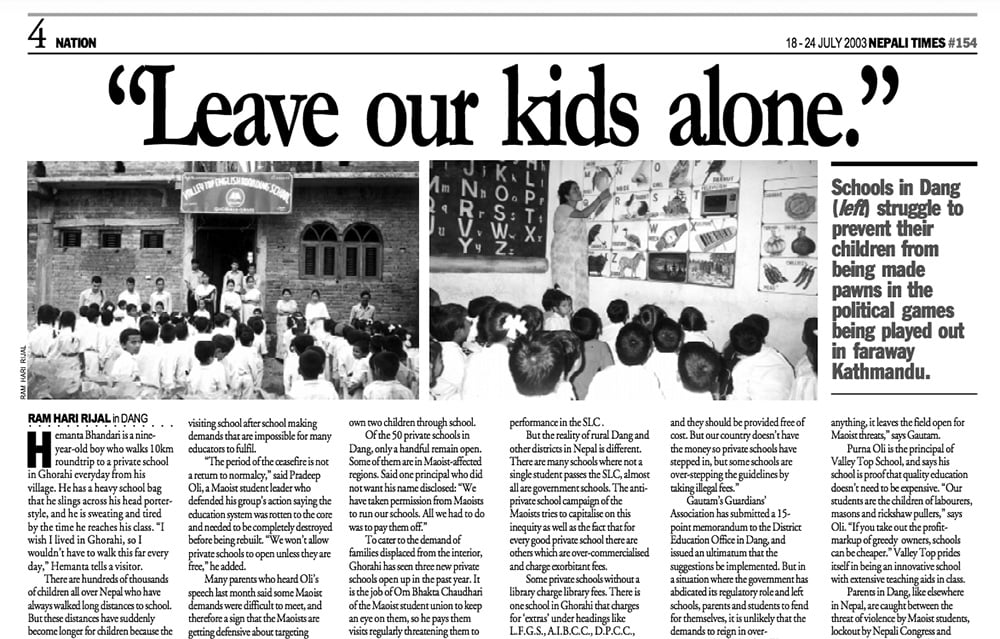
Hemanta Bhandari is a nine-year-old boy who walks 10km roundtrip to a private school in Ghorahi everyday from his village. He has a heavy school bag that he slings across his head porter-style, and he is sweating and tired by the time he reaches his class. "I wish I lived in Ghorahi, so I wouldn't have to walk this far every day," Hemanta tells a visitor.
There are hundreds of thousands of children all over Nepal who have always walked long distances to school. But these distances have suddenly become longer for children because the Maoists have forced the closure of private schools in their home village. Hemanta's old school in Guruwagau shut down for good after Maoist threats and extortion.
But now, parents and guardians of children in Dang are fighting back. They are tired of waiting for the government to do anything, so they got together to open some of the schools that the Maoists closed down in towns across the Dang valley last year. After the ceasefire, the parents had successfully helped open schools but in the past months the Maoist student unions have again started visiting school after school making demands that are impossible for many educators to fulfil.
The Maoists now seem defensive about targeting schools. Parents' outrage over the prolonged closure of schools has now boiled over, and the simultaneous re-opening of some schools is the first sure sign that the tide may be turning because of public opinion.
From archive material of Nepali Times of the past 20 years, site search: www.nepalitimes.com