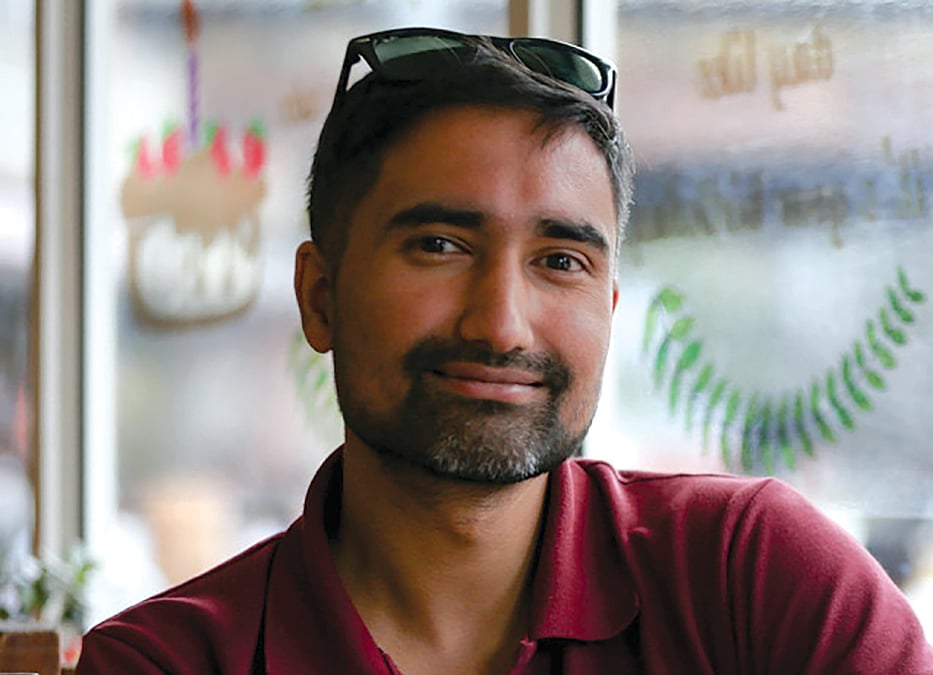
During his postdoctoral research in London, Bishesh Khanal was trying to build a robot to perform automated ultrasound scans. He remembers thinking Nepal could not afford such expensive robots, how about a simple device for non-experts in remote areas to do ultrasounds?
This was not a new idea for Khanal. While pursuing his PhD in a research lab in France, he had tried to find appropriate healthcare solutions for low and middle-income countries.
“We saw powerful countries racing to make Covid jabs after the virus threatened them, but other lethal diseases like dengue and malaria that affect poorer countries are neglected,” Khanal says.
As an engineering student in Kathmandu, Khanal already knew Nepal was ill-equipped in research and development. Even the Institute of Engineering lacked opportunities for students to foster innovation.
Khanal returned to Nepal, and established NAAMII (Nepal Applied Mathematics and Informatics Institute for Research) together with a team of co-founders to explore areas where technology, specifically Artificial Intelligence, could help make a difference.
Read Also: Artificially intelligent medicine, Yugeshwor Koirala
In Europe, Khanal had friends and colleagues who shared his belief in using technologies like AI models to help solve some of Nepal's most basic problems from access to healthcare to governance and cyber-security.
“We all agreed that harnessing that potential in research could change things,” Khanal recalls.
Nepal’s universities lack opportunities to institutionalise STEM (science, technology, engineering, and math) research. Khanal and his team knew that trying to bring change at the university level would lead nowhere. So they settled on a second option: starting a small and focussed centre to catalyse change.