
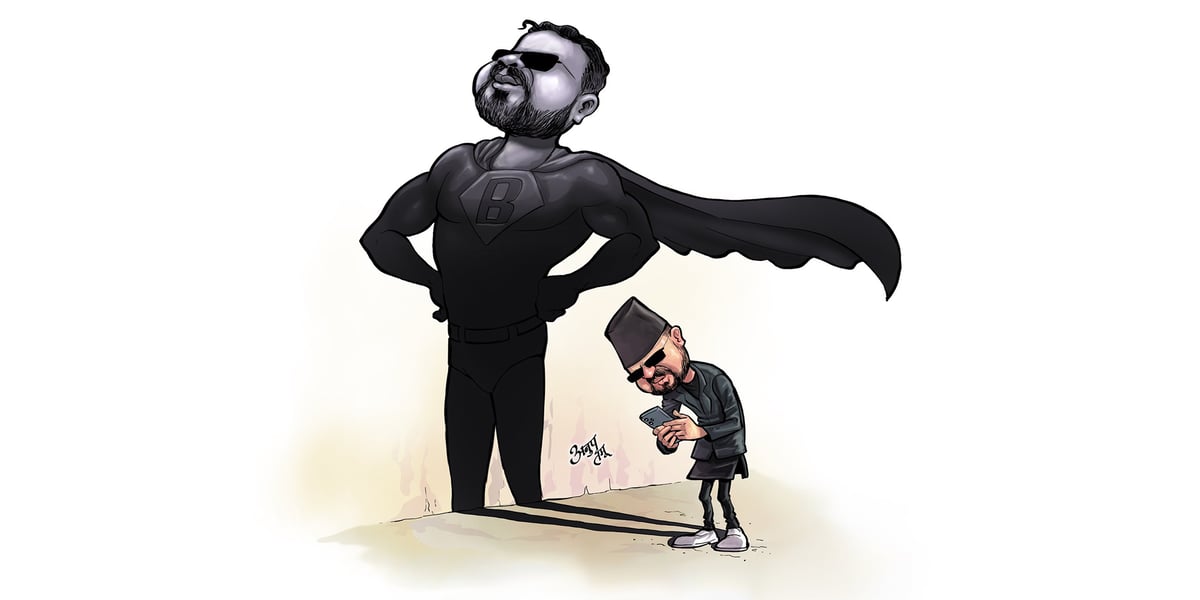
The slew of decrees in the first 100 days of the Balendra Shah administration has divided public opinion between those who see them as erratic, vengeful and authoritarian, and supporters who feel the prime minister can do no wrong.
From walking out of Parliament sessions or delivering controversial remarks when he finally addressed the House, to his midnight posts on social media, critics see gimmicks, while supporters admire statesmanship.
Arrest spree
The new government hit the ground running in late March with the arrests of former Prime Minister K P Oli and Home Minister Ramesh Lekhak following the recommendation of the Gauri Bahadur Karki Commission’s inquiry report, which recommended that key political leaders and security authorities be investigated for their involvement in last September’s youth protests during which 22 protestors were shot by law enforcement.
Since March, more political and business leaders have been arrested on charges of corruption, money laundering, and abuse of power. Business tycoons Deepak Bhatta, Shankhar Agrawal, Shekhar Golchha, and former Finance Minister Bishnu Paudel have been detained.
Supporters:
Proof that Balen is serious about bringing the corrupt and those responsible for the 8 September massacre to justice, and even the high and mighty. He is also cleaning up cronyism and patronage between politicians and oligarchs—uprooting impunity.
Critics:
The arrests were driven by political vendetta, and denied due process. Arbitrary detention of high-profile businessmen has further eroded the investment climate and undermines the RSP’s own growth-driven agenda. Home Minister Sudan Gurung and RSP Chair Rabi Lamichhane themselves have skeletons in their closets.
Eviction of landless
A month into office, PM Balendra Shah sent in security forces on a sweeping demolition drive of settlements in Kathmandu and across the country, evicting hundreds of thousands of landless Nepalis. The government’s efforts to verify the genuinely landless, relocate, and compensate them have been slow.
Supporters:
The evictions were aimed to separate ‘fake’ squatters from the ‘real’ landless. In the past, political parties and the land mafia settled most of them across the city as vote banks, and they lived along river banks at risk from floods.
Critics:
The homes were bulldozed on short notice. Detecting ‘fake squatters’ should have preceded mass demolitions. The evictees are in temporary housing without basic facilities. This was a blatant violation of citizens' human rights.
Ordinances
Despite a near two-thirds majority in Parliament, the RSP decided to rule by ordinances on sweeping administrative purges and bureaucratic reforms. The most controversial was the change in voting rules in the Constitutional Council which allowed the PM to make his own man Chief Justice.
Supporters:
The parliamentary process is too slow to deliver the rapid anti-corruption reforms promised to voters. The Supreme Court itself had been politicised and this was a way to clean up the judiciary.
Critics:
RSP is no different from previous governments that issued politically-convenient ordinances. The party also bypassed its own majority in Parliament, and showed centralised power in the executive leadership. The Constitutional Council ordinance granted the prime minister exclusive and undemocratic authority over Constitutional appointments.
Bureaucracy
The ordinances made way for the dismissal of more than 1,500 political appointees across public institutions. The party is also pushing a one-time measure to downsize the bureaucracy by lowering the retirement age to 55, after which it will increase to 60 years. Decades-old financial records of 30,000+ officials have also been demanded.
Supporters:
The administrative overhaul is a necessary measure to dismantle patronage networks and ease financial strain on the state apparatus. The downsizing will be a bureaucratic reset and make way for younger, more informed, digitally-savvy civil servants without political baggage.
Critics:
Downsizing has caused a leadership, personnel, and knowledge vacuum in the civil service. The sweeping purge has demoralised honest bureaucrats which will impact on efficient service delivery.
Foreign policy
Since becoming prime minister, PM Shah has refused to meet high-ranking foreign emissaries, maintaining that he will only meet officials of equivalent political rank. He refused invitation from India for a state visit, and made pronouncements on the border that riled both Nepalis and Indians. This diplomatic disengagement has confused Delhi and Beijing, and actually brought them together. Mistreatment of the German ambassador at the PMO has antagonised Nepal’s development partners.
Supporters:
PM Shah is showing that he is no pushover, and that Nepal will not grovel to foreigners. He is trying to show that Nepal has its own identity and is not just a buffer state. Meeting all ambassadors together and not one-on-one makes diplomacy more transparent.
Critics:
This is one foreign policy fiasco after another that has hurt Nepal’s standing in the world. Alienating India, China and the US by not meeting their envoys is not smart because it is needlessly aggressive and counterproductive.
Passport Procurement
On Sunday, the PMO forced the CIAA to issue detention orders against those involved in a contract to supply passports. After detaining officials at Singha Darbar for nine hours, it also ordered the Special Court to start proceedings against two German passport companies as well as 15 other officials over irregularities.
German companies Muehlbauer ID Services and Veridos were awarded the five-year contract worth Rs10.13 billion last year to arrange 6.4 million e-passports. The DoP is alleged to have manipulated the passport procurement process to award the contract to the two companies.
The French company IDEMIA supplied Nepal’s Machine Readable Passports and e-passports until last year, and lost the bid to Muehlbauer ID Services and Veridos after 17 years. IDEMIA challenged this outcome in court, but its claims were dismissed by the Public Procurement Review Committee. The French firm itself is alleged to have bypassed Nepal’s Public Procurement Act through bribery, and the action against the German firm is seen to be retribution for losing the contract.
Supporters:
The Balen leadership is showing a zero-tolerance policy towards corruption even when foreign companies are involved. German Ambassador Udo Eugen Volz should have come through the Foreign Ministry and with an appointment, he can’t just show up. The CIAA was infiltrated by past politicians and itself needs to be cleaned up.
Critics:
PMO officials have breached diplomatic conduct by needlessly behaving rudely with the ambassador of an important country. The PMO threatened and pressured officials of an independent watchdog like the CIAA to do its bidding, which is unconstitutional.