
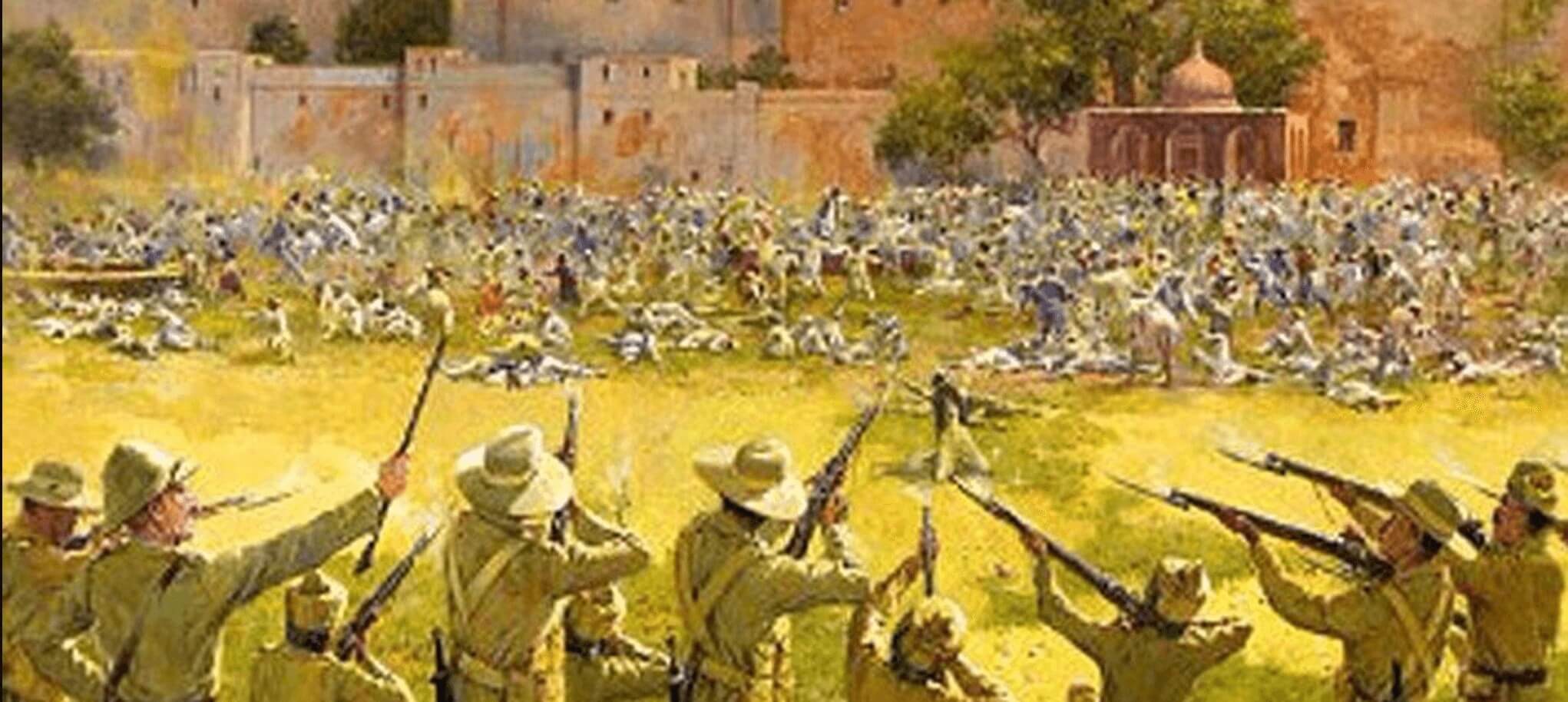
A hundred years ago, on 13 April 1919, British Brigadier-General R E H Dyer ordered his troops to
in Amritsar killing about 380 of them. The troops included 25 Gurkha riflemen from the 1/9thBattalion.The event remains one of the most shocking in the long history of British colonialism in India, and is remembered in ceremonies every year, held not just in Amritsar but across India. Although the town remained remarkably quiet afterwards, it had previously been the site of considerable popular unrest related to the emerging Indian nationalist movement, and in the following months and years this atrocity played an iconic role in the rise of Mahatma Gandhi’s movement.
The massacre itself, however, was only part of a wider and deeper conflict between the British and their Indian subjects, which lay at the heart of the late colonial ‘situation’ in the British Raj.
There had been meetings in Amritsar in support of Gandhi’s movement, another a series of peaceful hartals. But on 9 April, the Government of the Punjab ordered the deportation of the two nationalist leaders from Amritsar and their internment in Dharamsala, and elaborate arrangements were made to increase the level of security in case there was a political reaction.
Indeed, there followed attacks on various government offices and their staff, including the Telegraph Office and Telephone Exchange, as well as the Alliance Bank, the National Bank and the Chartered Bank, all of which were also subject to looting. The Town Hall and the nearby sub-post office were set on fire, sub-post offices at the Golden Temple, Hajith Mandi and Dhal Basti Ram were looted.
In some cases, the violence led to the killing of Europeans and Anglo-Indians. The main goods’ yard in Amritsar was stormed, damaged and looted, the guard of the North Western Railway was beaten to death and the Station Superintendent injured severely. One infamous incident involved a lady missionary who was pursued by a crowd, knocked down, beaten while on the ground and left for dead. She was picked up by some kind locals whose action ensured she received medical attention and may therefore have saved her life.
A total of about ten people, mainly Muslims, were killed by government forces on 10 April. But the situation was now considered to be beyond civil control. A contingent of some 260 Gurkhas from the 1/9th, arriving at the railway station on the way to Peshawar, was detained and armed. The pickets were strengthened throughout the town. Late at night, 300 troops (125 British and 175 Baluchis) arrived from Lahore under Major Macdonald, and early the next day (11 April), 300 more troops arrived from Jalandhar (100 British and 200 Indian). The city remained generally quiet throughout the day, preoccupied with funerals and burying the dead, there were processions of both Hindus and Muslims.
The Deputy Commissioner issued a notice to the leaders of these processions that gatherings of persons or processions would not be allowed and that any such demonstrations would be fired on. On the evening of the 11 April, Brigadier-General Dyer, took over command from Major Macdonald.
On 12 April, a column of troops under General Dyer marched around the city as crowds were reported to be gathering outside it. Dyer reported later that ‘the bearing of the inhabitants was most insolent and many spat on the ground as the troops passed’.